
Feeling your CPAP air pressure is too low or too high? Check the causes and how to deal with it.
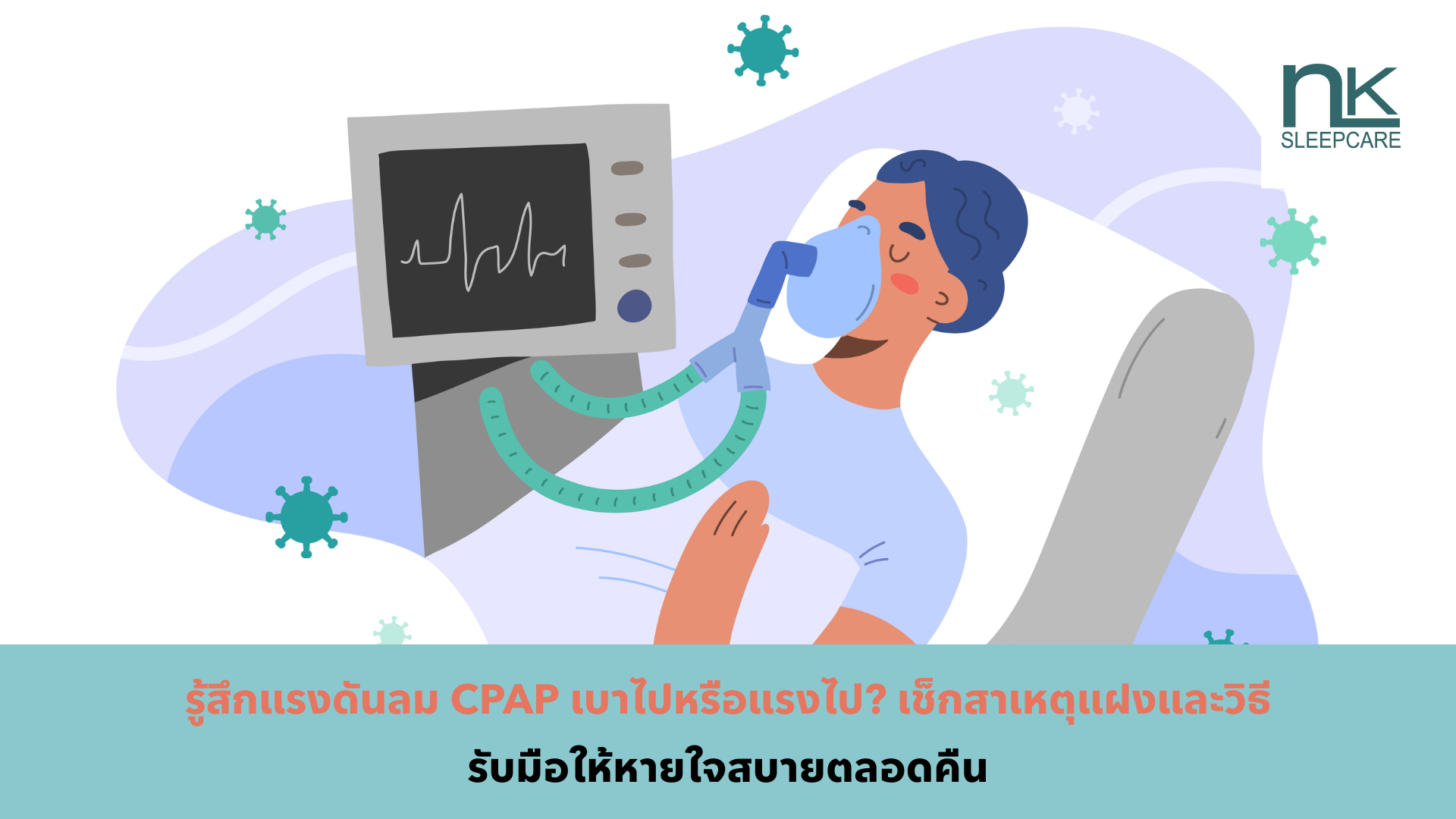
Feeling your CPAP airflow is too weak or too strong? Check for underlying causes and how to manage it for comfortable breathing throughout the night.
wearCPAP Masks Have you ever woken up in the middle of the night to find air being blown in your face, making you feel uncomfortable? Or perhaps you turn on your CPAP machine and find no air is coming out at all? Both of these symptoms are very common in people using CPAP machines and don't always mean the device is faulty. They may be due to minor settings or behaviors that can be adjusted by yourself.
Today we'll help you check the signs, pinpoint the root cause, and find ways to deal with it so you can breathe comfortably again throughout the night.
What are the warning signs that your CPAP air pressure is abnormal?
Sometimes the body sends warning signals that the air pressure being used is not right for its needs. This can be observed from... 2 The main cases are as follows:
- In case the wind is too light: You often wake up feeling unrested, have a dull headache in the morning, or experience a return to snoring and waking up in the middle of the night like before using the device, because the pressure received is not enough to support the airway.
- In case of excessively strong winds: Common symptoms include a burning sensation in the throat, the need to open the mouth to fight against the air pressure, air leakage causing dry eyes, and frequent bloating and acid reflux from unintentionally swallowing air (aerophagia).
In-depth look at the reasons: Why does your CPAP air pressure feel too low?
The mechanism ofCPAP machine It can be compared to the system...Pay water If the tubing system has leaks or blockages, the water pressure at the end will decrease. CPAP machines, which maintain a continuous air pressure level throughout sleep, operate on the same principle.
- The ramp time is too long: This system is designed to provide a gentle breeze initially to help you lie down more easily. However, if set for too long, it may cause discomfort due to insufficient airflow, requiring you to exert yourself with deep breaths.
- The dust filter is clogged or the machine has not been maintained: An air filter that accumulates dust for extended periods will block the airflow to the motor, causing the motor to work harder but deliver less airflow. Furthermore, if the filter is not replaced regularly, the motor may deteriorate faster than normal, resulting in a noticeable drop in pressure.
- Water droplets accumulating in the air ducts (Rainout): The extremely cold air inside an air-conditioned room, contrasting with the high humidity produced by the unit, causes condensation (rainout) to form and accumulate in the air ducts. This results in uneven airflow, sometimes causing the airflow to feel choppy or weaker than usual.
- Improper voltage setting: Sometimes, the settings may result in improper air pressure, such as the minimum/maximum pressure being too low in an auto CPAP machine or the therapy pressure being too low in a constant pressure machine.
In-depth look at the causes: Why does the CPAP air pressure feel too strong?
The feeling of tightness or difficulty breathing due to a lack of air can be caused by several factors. Let's check these three main causes to see which one is causing your problem.
- Mask leaks are the number one culprit.: When the mask doesn't fit snugly and air leaks out, the device in Auto mode mistakenly thinks your airway is narrowed and tries to continuously increase the air pressure to compensate for the lost air, eventually resulting in a powerful jet of air being blown into your face.
- Exhalation Respiratory Perspiration (EPR/Flex) system is not activated: Many people encounter problems. Difficulty exhaling, CPAP The wind is constantly pushing against the flow because the air vents are not turned on. If you suspect that... What is the EPR CPAP function? It's a system from the ResMed brand that helps reduce pressure during exhalation. As for the question... What is CPAP FLEX? That's the gentle exhalation system from Philips, which uses technologies that greatly reduce resistance when you exhale. Read a detailed explanation of how to set it up here -> Experiencing discomfort when exhaling while using a CPAP machine? Learn about the EPR/Flex function, which helps relax your breathing for a more comfortable sleep.
- Lying on your back, or your body needs a change in pressure: When lying on your back, the base of the tongue falls back and obstructs the airway more than when lying on your side. Therefore, the automatic airway opener has to increase the air pressure to keep the airway open, making it feel like the air is being blown stronger than normal.
- Improper voltage setting: Sometimes, the settings may result in improper air pressure, such as excessively high minimum/maximum pressure in auto CPAP machines or excessively high therapy pressure in constant pressure machines.
4 basic troubleshooting steps when you feel your CPAP pressure is incorrect.
- How to safely adjust ramp and EPR settings yourself: If the breeze is too weak when you start to sleep, try shortening the ramp time. For those who find the breeze too strong and uncomfortable, this is... How to adjust a CPAP machine to make exhaling easier. This can be achieved by activating EPR or Flex mode in the Comfort Menu at level 1 or 2, which helps reduce resistance during exhalation.
- How to check and fix a leaking face mask in the middle of the night: If you wake up to find strong winds blowing in your face, check if your mask straps are loose or crooked. Try to adjust the mask to fit snugly against your face, focusing on a comfortable fit that isn't so tight it causes pain.
- Maintaining the cleanliness of the filter and air ducts: The dust filter should be removed and cleaned or replaced according to its service life, and the air ducts should be cleaned regularly to prevent dust blockage that can cause pressure drop.
- Adjusting your sleeping position: Try sleeping on your side more often. Sleeping on your side can help reduce airway obstruction, so the machine doesn't have to work as hard to increase air pressure to high levels.
Why is calibration and consulting an expert so important?
Basic comfort settings like ramps or EPR can be adjusted independently, but it is crucial to avoid altering the air pressure level without a supporting medical sleep report. Arbitrarily adjusting air pressure can damage the alveoli or increase the risk of developing Transcranial Congestive Sleep Apnea (TECSA), a complication that the medical community highly values.
If, after initial adjustments, you still feel the airflow is too weak or too strong, don't endure the discomfort. Contact us or send your usage results to our expert team. NK Sleepcare Obtained at LINE OA: @nksleepcare We are ready to provide advice to help you get back to sleeping comfortably and safely every night.


