Home Sleep Test
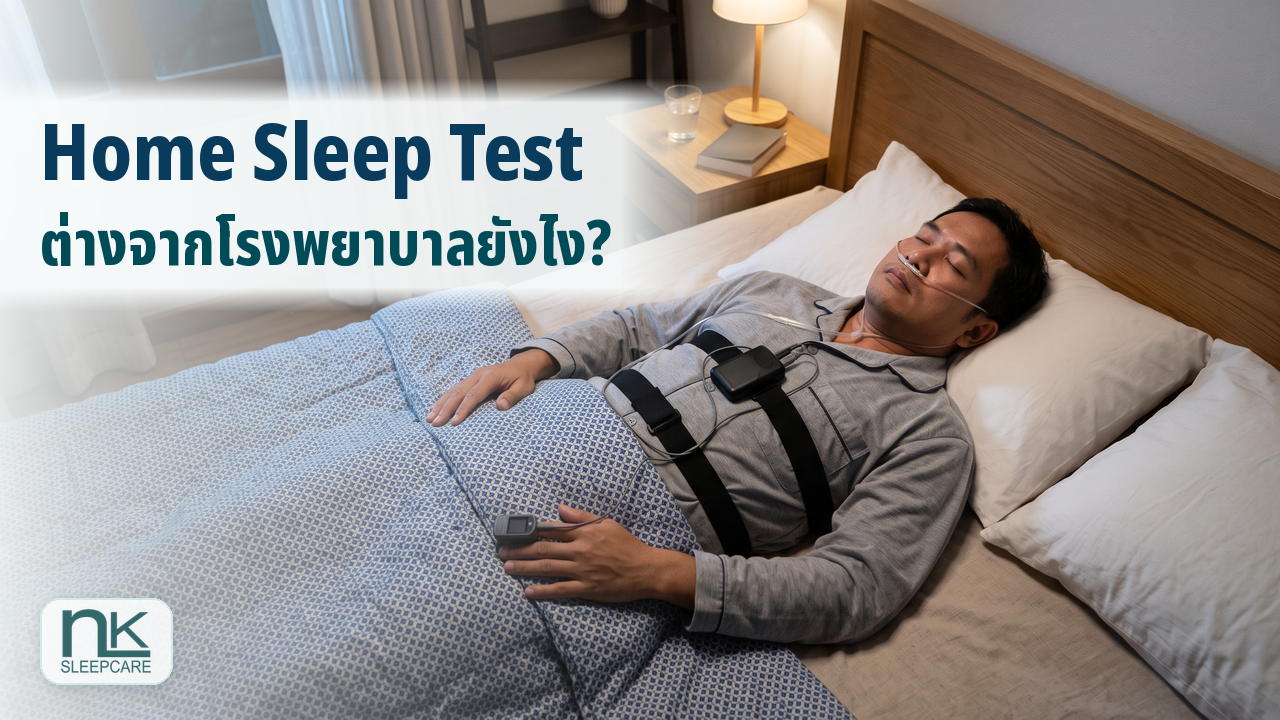
If you suspect you may have a dangerous form of snoring or sleep apnea and want a sleep study to confirm, diagnose the cause, and measure the severity of your condition, but find yourself reluctant to go to a hospital for an in-person study—perhaps due to reasons such as cost, inability to sleep in an unfamiliar environment, etc.—I recommend a comprehensive home sleep study as an alternative.
How is a home sleep study similar to or different from a hospital sleep study?
Home polysomnography (Type 2 home sleep test) has similarities and differences compared to hospital-based sleep tests, primarily as follows:
- This is an examination at a comparable level of resolution.
Both home and hospital monitoring involves measuring necessary signals in accordance with the regulations of the American Academy of Sleep Medicine (AASM), such as brainwave (EEG), eye movement (EOG), chin movement (EMG), electrocardiogram (EKG), breathing, and chest movement, etc. - Analyzed by technical staff. (Sleep Technician) who has been trained and reads.Results summarized by the doctor.The same applies specifically to sleep.
- Home testing will use portable devices.
This is a diagnostic device capable of measuring signals similar to the larger equipment used in hospitals, but it may only include the necessary channels and comply with AASM regulations. It is significantly smaller in size and can be strapped to the person being tested, allowing them to walk or engage in activities such as watching television or reading comfortably. - Home checks will be conducted without someone present.
This differs from examinations conducted in a hospital room where someone is present overnight. Because the examination is performed at the patient's home, it's not possible to have someone stay in the patient's bedroom. The purpose of having someone present is to ensure that the equipment doesn't become dislodged during the examination. However, home examinations use portable devices securely attached to the patient's body. If the staff is skilled and well-trained, the chances of these devices becoming dislodged are very low.
The advantages of a comprehensive home sleep test (Type 2 Home Sleep Test).
- It is often cheaper than getting tested at a hospital.
- Patients can sleep more comfortably and soundly because they are sleeping in their own bedroom.
- It provides privacy because you don't have someone watching you while you sleep. Some people may not be able to sleep if someone is sleeping next to them.
- The test results were accurate and most similar to our normal sleep patterns.
- Some people experience insomnia, short periods of sleep, or interrupted sleep, which can lead to inaccurate test results. In some cases, a repeat test may be necessary, resulting in increased costs.
- You can take the test results to consult a doctor at any hospital of your choice. However, if you have the test done at a hospital, you must see a doctor at that hospital only.
- No need to wait in long queues for check-ups. In some public hospitals, waiting lists are several months long, which in some cases patients cannot wait for, such as those with serious complications requiring urgent testing.
- Some patients are immobile or have difficulty moving, such as those with stroke, weakness, or advanced age. In such cases, home sleep studies are a suitable option.
Budget-friendly home sleep test (Type 3 Home Sleep Test)
The home sleep tests I mentioned above referred to the detailed Type 2 Home Sleep Test, which is as detailed as a hospital-based test but without an attendant. However, there's another equally popular type of home sleep test: the more economical Type 3 Sleep Test, or sleep screening.
This cost-effective version uses fewer channels than the one above, primarily by omitting the measurement of electroencephalogram (EEG) signals. According to AASM guidelines, it includes:
- Airflow patterns to detect sleep apnea.
- Snoring
- Chest respiratory effort
- Abdominal respiratory effort
- Blood oxygen level (Oxygen saturation)
- Pulse
- Sleeping position (Body position), such as lying on your back, left side, or right side.
This type of test focuses specifically on breathing and the cardiovascular system. In general, it measures various signals similar to a hospital sleep study, but it does not measure brain electrical activity (EEG), eye muscle activity (EOG), or chin muscle activity (EMG). Therefore, it cannot determine how much of the patient is in sleep or wakefulness, or whether the sleep is effective.
However, this type of examination is more convenient and faster than others because it requires less equipment, resulting in less discomfort for the patient and making it easier for them to fall asleep.
Currently, many countries around the world, such as the United States, have approved reimbursement for these low-cost sleep studies. As a result, home-based sleep studies using this method are becoming increasingly popular because they are cost-effective and require less personnel. Furthermore, they provide greater convenience and accessibility for patients with snoring problems or suspected sleep apnea.
Those suitable for Type 3 testing include individuals at high risk of having...Obstructive sleep apnea (Obstructive Sleep Apnea; OSA) of moderate to severe severity, but not requiring a long waiting list. It is also suitable for monitoring post-surgical treatment, CPAP machine use, or weight loss.
However, this test method carries a possibility of inaccurate results. Therefore, individuals suspected of having sleep apnea but whose test results are negative, or those with co-existing conditions such as heart disease, chronic obstructive pulmonary disease (COPD), neuromuscular disorders, or suspected of having other sleep disorders such as restless leg syndrome or narcolepsy, should only undergo standard testing at a hospital or at home (Type 2).
summarize
Home sleep study is an attractive option for individuals who snore or suspect they have sleep apnea, as it offers several advantages such as cost-effectiveness, short waiting times, and improved sleep quality due to sleeping in a familiar environment, leading to more accurate results. However, each method has its own pros and cons. Therefore, before making a decision, you should consult a sleep specialist to assess your needs and determine which type of sleep study is most suitable for you.