
Let's learn about the sleep stages and the sleep cycle.
Many people believe that "sleeping for 7-8 hours" is the key to effective sleep, but the truth is... “"The quality of sleep" is just as important as "the duration of sleep".” Because even if you sleep for a long time, if your sleep cycle is disrupted or the sleep stages are unbalanced, your body may not be truly resting.
This article will give you a deeper understanding of... Sleep Stages and Sleep Cycle From the mechanics of sleep to applying that knowledge to improve sleep quality, this guide provides professional ways to monitor your own sleep.
Get to know the sleep stages and the sleep cycle.
Sleep is not simply "falling asleep" or "not sleeping" as many people understand it, but a complex process in which the brain and body work together systematically at different times. Throughout the night, the body is not in a single state but gradually...Gradually change the level of work. Both in terms of...Body restoration, information processing, and hormone balance.
To illustrate with a simple analogy, sleep is like the body's "reset system," with a clear process. It's not a complete shutdown, but rather a period where the body chooses to perform certain tasks that it cannot fully perform while awake, such as cell repair, memory storage, and deep energy restoration.
The structure of sleep can be divided into two main parts that work together:
- Sleep Stages Which indicates that... “"Depth of sleep"” In each period
- Sleep Cycle which is “"Transition sequence"” Each stage repeats itself throughout the night.
Understanding these two aspects isn't just general knowledge; it helps you analyze sleep problems accurately. In many cases, the problem isn't simply due to insufficient sleep, but rather to "abnormal sleep structure" that you may not even be aware of.
Common sleep problems include:
- I slept for the full hours, but woke up feeling unrested.
- Feeling drowsy, tired, or having decreased concentration during the day.
- Snoring or having...sleep apnea
These symptoms often reflect that your sleep cycle may be interrupted or that some sleep stages are incomplete, such as insufficient deep sleep or incomplete entry into REM sleep (dreaming).
What are the stages of sleep? What are the different stages?
Sleep stages refer to the "depths of sleep" that the body and brain systematically transition through, from light sleep to deep sleep. Each stage plays a different crucial role in physical recovery, cell repair, and brain information processing.
Many people mistakenly believe that sleep is simply a time when the body rests. In reality, the brain continues to work constantly, only changing its mode of activity through different stages. This is why quality sleep requires a balanced and complete set of sleep stages.
By its structure Sleep stages can be divided into two main groups. namely
1. Normal sleep (Non-Rapid Eye Movement Sleep or Non-REM Sleep)
The non-REM sleep phase is when the body enters a state of true rest and recovery, especially during deep sleep, which directly affects energy levels and freshness for the following day.
Non-REM sleep is divided into three sub-stages as follows:
Stage 1: Starting to feel sleepy.
It is a period.The transition from "wakeful state" to "sleep state".“ This usually doesn't take long, but it's important as it marks the beginning of the entire sleep process.
During this period
- The brain begins to decrease its activity level, shifting from fast brainwaves to slower ones.
- My muscles are starting to relax, but I'm not yet in deep sleep.
- Responsiveness to the surroundings begins to decrease.
Common symptoms
- Feeling drowsy or unsure if you're asleep yet.
- You might experience a hypnic jerk, similar to falling from a height.
- Some people may experience strange images or sounds before falling asleep.
This period isn't considered true rest yet; if you're woken up, you'll feel like you haven't slept at all.
Stage 2: Light Sleep
This is the period when the body enters a more serious sleep phase, and it accounts for the longest portion of all sleep, approximately 45–55¢³ of each night's sleep time.
During this period
- The heart rate begins to slow down.
- Body temperature decreased slightly.
- The nervous system begins to “cut off” its perception of external disturbances.
What happens in the brain?
- Sleep spindles are created, which are involved in data storage.
- Please help filter out important and unimportant information.
Benefits of this period
- Helps improve short-term memory.
- Improve your focusing efficiency.
- Prepare your body to enter deep sleep.
Although it's a "light sleep," Stage 2 is considered a crucial period.It has a significant impact on learning and work performance the following day.
Stage 3: Deep Sleep
This is the period when...Most importantly in the aspect of "physical rehabilitation".“ And it is a key indicator of sleep quality.
During this period
- Brain waves will slow down significantly (Delta Wave).
- The body enters a state of maximum rest.
- The response to external stimuli is significantly reduced.
Key features
- Very difficult to wake up. If they do wake up during this time, they will be groggy (Sleep Inertia).
- Muscles and organs are repaired.
- High levels of growth hormone are secreted.
Benefits of Deep Sleep
- Muscle recovery and repair.
- Strengthen the immune system.
- Restore energy balance in the body.
- It makes you wake up feeling refreshed.
Even if you sleep for 7-8 hours, if your body doesn't get enough deep sleep, you can still feel "not refreshed."
Normal sleep, or non-REM sleep, is the foundation for physical recovery.“ That gives us energy and good health in the long term, andIt is an important part that must occur continuously in every sleep cycle. To achieve the most effective sleep.
2. Dreaming sleep (Rapid Eye Movement Sleep or REM Sleep)
REM sleep, or dreaming sleep, is the most prominent stage of sleep in terms of "brain function."“ Even though the body is at rest, the brain remains alert, similar to when we are awake. This is a crucial period directly related to learning, memory, and processing information that occurs throughout the day.
During REM sleep, several changes occur simultaneously, including:
- The brain is highly active, especially the areas related to memory and emotions.
- The nervous system will be stimulated. It creates complex and realistic dreams.
- The body's muscles will be "temporarily inhibited" from moving. (Muscle Atonia) To prevent the body from responding to dreams.
Key characteristics of REM sleep.
- The eyeballs moved rapidly back and forth.
- This is the time when dreams occur most frequently and are most detailed.
- Heart rate and breathing may be irregular.
- The body is unable to move normally, even though the brain is functioning at a high level.
REM sleep, or dreaming sleep, plays a role.It is extremely important for brain development.
- Helps create and store. “"Long-term memory"
- Enhance the learning process and connect new information with existing information.
- It helps in processing emotions, reducing stress, and restoring mental balance.
- Stimulate creativity and imagination.
What is the sleep cycle and how does it work?
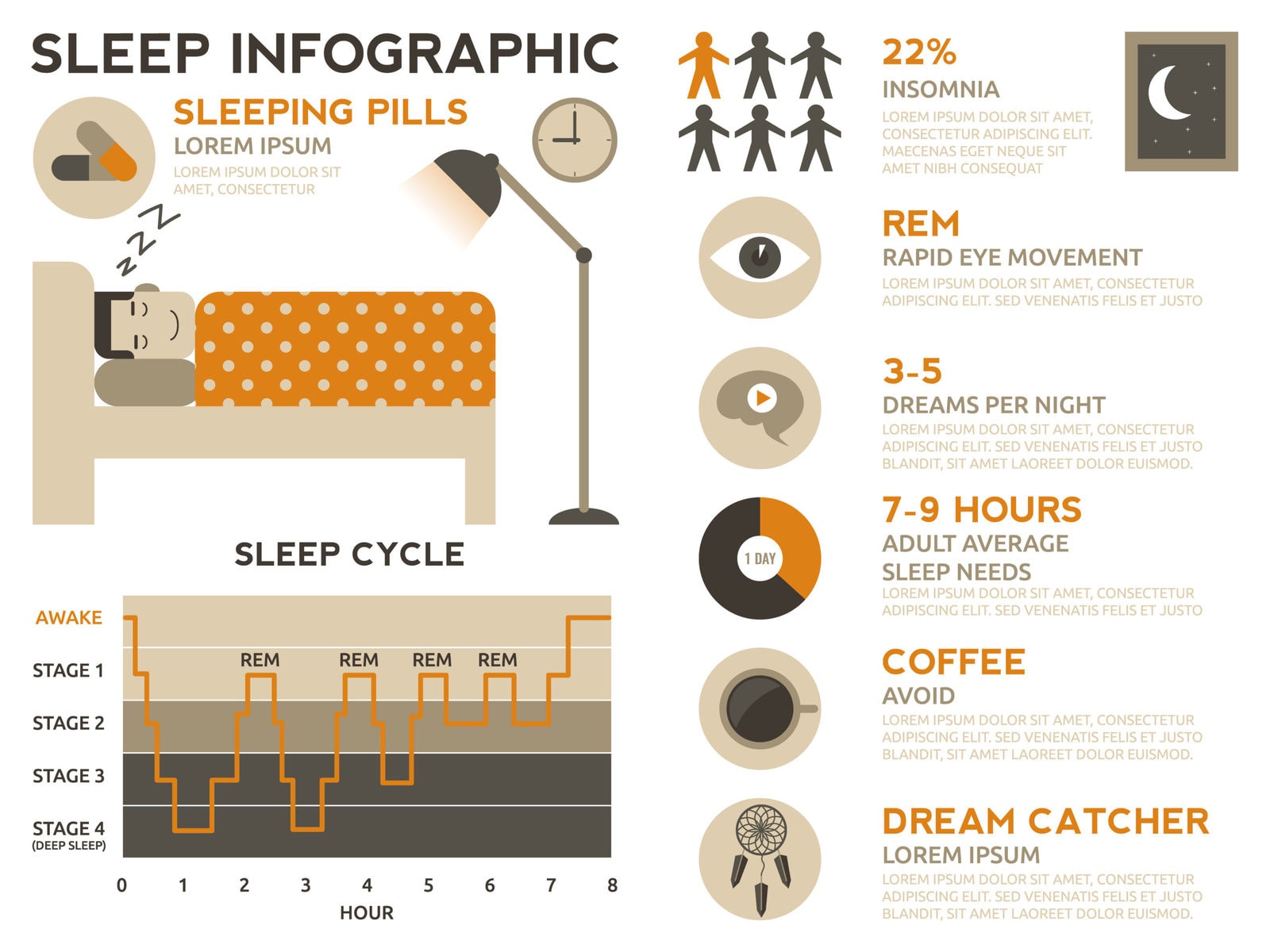
The sleep cycle is the sequence of transitions through sleep stages that occur repeatedly and systematically throughout the night. Sleep is not a static sleep pattern, but rather a process in which the body and brain gradually switch levels of activity to promote balanced physical and mental recovery.
Looking deeper, the sleep cycle is like a "reset cycle" of the body. Each cycle includes periods focused on body repair (non-REM) and periods focused on brain processing (REM). Both must work together continuously to achieve truly quality sleep.
How many minutes does one cycle take?
On average, One sleep cycle takes approximately 90 minutes. One round consists of:
- The non-REM phase is approximately 70-80 minutes.
- The REM phase lasts approximately 10–20 minutes.
The body cycles through the body in one night. The sleep cycle repeats approximately 3–6 times. It depends on each person's sleep duration.Quality sleep isn't measured solely by "the number of hours," but also by how many sleep cycles we complete and whether each cycle is thorough.
How does the sleep cycle work?
When we begin to fall asleep, our bodies don't immediately enter deep sleep, but gradually transition through the following sleep stages:
- Starting from Stage 1 (getting sleepy).
- Entering Stage 2 (Light Sleep)
- Delving deeper into Stage 3 (Deep Sleep)
- We will then "return" to Stage 2.
- Then enter the REM (dreaming) phase.
- Once REM is complete, the cycle will start again.
If you start feeling "not refreshed after sleep," feel sleepy during the day for no apparent reason, or frequently snore and wake up in the middle of the night, this may not just be a common sleep problem, but a sign that your sleep stages and sleep cycle are malfunctioning. A sleep study is the most accurate way to understand what's actually happening while you sleep. Sleep studies can be done at home via... Home Sleep Test This is convenient and suitable for those who want to start evaluating problems at a basic level, orSleep test at the hospital.This provides more insightful information, such as sleep structure, brainwaves, oxygen levels, and potentially underlying disorders, particularly sleep apnea that many people are unaware of.