
What is insomnia? Why does it occur, and how should it be managed?
Last updated:
Have you ever experienced being very sleepy but unable to fall back asleep in the dark? Or waking up in the middle of the night and having your mind wander? Some people wake up too early and can't fall back asleep. These problems may be symptoms of insomnia, which means difficulty falling asleep, interrupted sleep, or poor sleep quality, even with sufficient time and a supportive environment, affecting your daytime life.[1,4]
Occasional poor sleep is not the same as chronic insomnia, and you shouldn't self-diagnose based on the number of nights or a single symptom. If you experience loud snoring, pauses and restarts insomnia, gasping for breath, or noticeable daytime sleepiness, you should tell your doctor about it. These symptoms may be associated with sleep apnea, but they aren't necessarily confirmation of insomnia. Your doctor may consider a sleep study if other sleep disorders are suspected, but it's not routinely used to confirm insomnia in everyone.[4,9]
What is insomnia, and how is it different from sleep deprivation?
Insomnia doesn't always mean insufficient sleep. The key is that you have the opportunity to get enough sleep, but still find it difficult to fall asleep, wake up frequently, wake up too early, or feel that your sleep is of poor quality. And this problem affects your daytime sleep, such as causing fatigue, drowsiness, decreased concentration, or irritability.[1,3]
Insufficient sleep due to lifestyle behaviors or limitations, such as working late but waking up early, means getting less sleep than the body needs. While the effects may be similar, the starting point is different. Even if someone sleeps for the required hours but doesn't feel refreshed, it's not necessarily conclusive that they have insomnia, because doctors need to consider sleep patterns, daytime impact, and the possibility of other sleep disorders.[4]
Before concluding that you're "not getting enough sleep," try answering these three questions.
-
Do you have a chance to get enough sleep?
Have you allowed enough sleep and created a relaxing environment?
-
When did the main problems occur?
Having difficulty falling asleep, waking up in the middle of the night and having difficulty falling back asleep, or waking up too early in the morning.
-
How was the next day affected?
Symptoms include fatigue, drowsiness, decreased concentration, or irritability.
What are some common types of insomnia?
Symptoms vary from person to person. Some experience only one type of symptom, while others alternate between several. Common symptoms include:
- It takes me a long time to fall asleep.
- Waking up frequently during the night, or having difficulty falling back asleep after waking up.
- Woke up too early and can't go back to sleep.
- Waking up feeling unrested, even after spending a long time in bed.
- During the daytime, you may feel tired, drowsy, have reduced concentration, or be easily irritated.[3]
If you use the word "restless" to describe your symptoms, add notes on whether you have difficulty falling asleep, wake up in the middle of the night, or wake up too early, and how this affects you the next day. Doctors assess insomnia based on sleep patterns and its impact on daily life, not just on a single word.[1,3,4] If you have other symptoms, note down the time, what happened, and any medications or substances you used, and tell your doctor this information instead of drawing your own conclusions about the cause.
How often does insomnia become chronic?
Assessment guidelines for chronic insomnia consider several components, including having problems for at least three nights a week, for at least three months, occurring despite adequate sleep, and causing poor daytime mood or performance.[1,4,7]
This data helps doctors systematize assessments, but it's not an online diagnostic test. Even if symptoms haven't been present for three months, you can seek advice from a doctor without waiting, especially if the symptoms significantly interfere with your life, are persistent, or you suspect other illnesses. Conversely, even multiple nights of poor sleep still need to be considered in context, such as work schedule, stress levels, illnesses, medications used, and actual sleep opportunities, before concluding it's chronic insomnia.
To prepare for your doctor's appointment, try recording the following information for 1–2 weeks: bedtime, estimated time of sleep, number of times you wake up, last time you woke up, naps, caffeine or alcohol consumption, and daytime symptoms. This record can help your doctor identify patterns and potentially related factors.[4]
Why, even though I'm sleepy, can't I fall asleep?
In insomnia, drowsiness doesn't always mean the brain and body are ready to sleep. Changing sleep schedules, a new environment, stress, or anxiety can increase the chances of falling asleep. Worrying about not getting enough sleep or constantly checking the clock can actually increase alertness.[2]
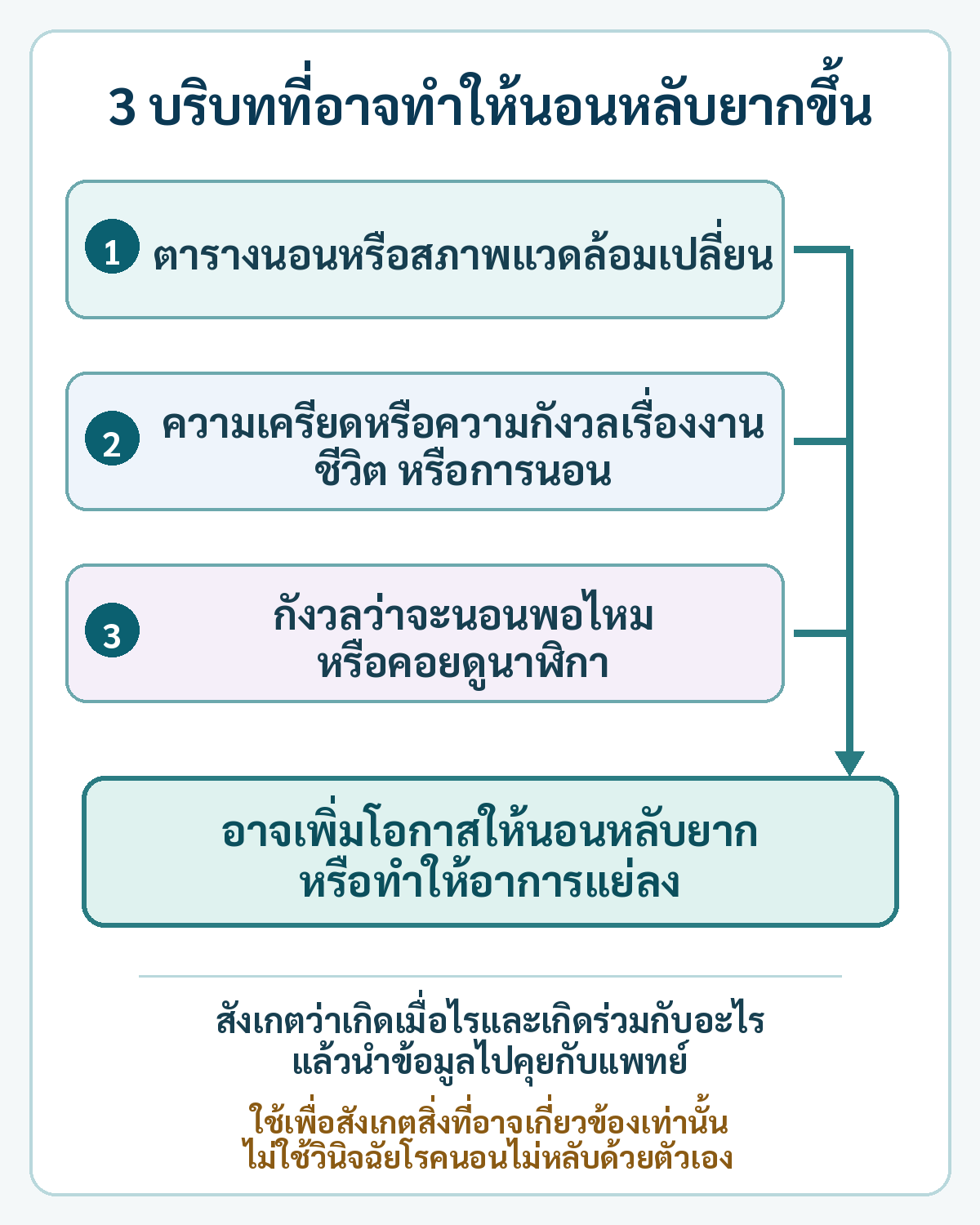
I'm sleepy and want to lie down, but why won't my brain stop working?
When your thoughts revolve around work, money, relationships, or the question, "Will I be able to sleep tonight?", you may feel tired but unable to relax. Simply having recurring thoughts doesn't mean you have a medical condition, but it's important information indicating whether the symptoms occur with anxiety or alertness. Writing down your worries before bed and discussing this pattern with your doctor, nurse, or sleep specialist may help you find the right starting point rather than trying many different sleep tips at once.
If persistent overthinking recurs and impacts your life, you should inform your doctor about both your sleep and what happens during the day. The doctor will help identify contributing factors and develop a personalized treatment plan. Do not self-diagnose "incessant overthinking."
If you also feel restless, what should you observe?
Try noting whether the symptoms occur before falling asleep, after waking up in the middle of the night, or during the day, and what they are associated with. This information will help you describe your symptoms more clearly when you talk to your doctor. The word "restless" alone is not enough to conclude that you have insomnia, because an assessment needs to consider sleep patterns and the impact on daytime sleep as well.[1,3,4]
How does insomnia affect the next day, and when should you see a doctor?
Insomnia can cause you to feel drowsy or tired the next day, have difficulty concentrating, become irritable, or feel like your thinking is slower.[1,3,7] These results are important because they help indicate that nighttime symptoms are genuinely interfering with your life, not because they need to be used as evidence that you have any particular illness.
If sleep problems interfere with your work, studies, mood, or safety; if the problems persist despite trying to establish a sleep schedule; or if you suspect an underlying medical condition, medication, or other sleep disorder—even just one—you should schedule an appointment with a doctor. If you feel so drowsy that you're unsure if you can safely drive or operate machinery, don't push yourself. And don't wait weeks or months before seeking advice from a doctor, nurse, or sleep specialist.
In addition, you should tell your doctor about symptoms such as loud snoring, pauses and restarts in breathing, gasping for breath, or daytime sleepiness, as these may require evaluation for sleep apnea. These symptoms do not yet confirm the condition and should not be used to self-diagnose or choose treatments.[9]
When you go to the doctor, what will the doctor assess?
Doctors typically begin by asking about sleep patterns, actual sleep hours, daytime effects, daily schedule, stress levels, underlying medical conditions, medications, beverages or substances used, and symptoms that might point to another sleep disorder. Keeping a sleep log for 1–2 weeks can help reveal these patterns more clearly.[4]
A sleep study is not a mandatory test to confirm insomnia in everyone. A doctor may consider it if the history suggests another sleep disorder, such as sleep apnea, circadian rhythm disorders, or narcolepsy.[4] The decision, therefore, depends on the medical question, not just on whether there is difficulty sleeping.
Before the appointment, try to prepare a list of all medications, both prescription and over-the-counter, your caffeine and alcohol consumption, your shift work pattern, and information from close relatives if they have noticed snoring or unusual breathing. This information will help the conversation start with what actually happened.
What are some evidence-based methods for managing and treating insomnia?
For chronic insomnia, Cognitive Behavioral Therapy for Insomnia (CBT-I) is the primary approach, helping to modify both thoughts that increase sleep anxiety and behaviors that perpetuate the cycle of difficulty falling asleep.[5,6,7] The program usually takes several weeks and should be tailored to each individual; it's not a trick that produces the same results overnight.
Sleep-promoting behaviors, such as maintaining a consistent wake-up time, creating a quiet and comfortable room, and monitoring caffeine or alcohol use, may be part of a care plan. However, sleep hygiene alone should not be suggested as a sufficient treatment for chronic insomnia.[6,7]
Treatment for insomnia requires a weigh-and-match analysis of benefits, side effects, duration of use, co-existing medical conditions, and other medications. Prescription medications should therefore be used under a doctor's plan. Over-the-counter products containing antihistamines may cause drowsiness but are not safe for everyone. Consult a doctor before using them to treat insomnia.[5] You should not increase, decrease, stop, or change your medication based on the information in this article.
If you don't feel refreshed after sleeping and also snore, what should you consider?
Feeling unrested during sleep can be caused by many factors. If you experience loud snoring, pauses and restarts in your breathing, gasping for breath, or daytime sleepiness, you should discuss these symptoms with your doctor, as they are common in sleep apnea.[9] However, one symptom alone is not enough to confirm sleep apnea.[9]
Your doctor may use your medical history, physical examination, and sleep study, as appropriate, to determine the cause.[4,9] The key is not to assume that all feelings of waking up feeling unrested are due to insomnia or OSA, and not to self-diagnose or treat based on a list of symptoms.
This article therefore only describes the key points to observe and discuss with your doctor. Details regarding the diagnosis of obstructive sleep apnea (OSA), the selection of sleep study types, and positive pressure therapy should be found in specific articles that have undergone medical review to ensure they are up-to-date.
Frequently asked questions about insomnia.
How many nights of insomnia should you see a doctor?
There's no need to wait for a specific number of nights to be met. If sleep problems interfere with work, studies, mood, or safety, or if the problem persists despite trying to schedule sleep, or if you suspect an underlying medical condition, medication, or other sleep disorder—even just one of these—you should schedule a consultation with a doctor. The criterion of at least three nights per week for at least three months is used to assess chronic insomnia, along with the likelihood of getting enough sleep and its daytime impact; it's not a requirement to wait until the requirement is met before seeking help.[1,4,7]
Is sleeping for the required hours but not feeling refreshed considered insomnia?
It's not conclusive yet. Feeling unrested might be related to insomnia, but it could also be due to an imbalance in sleep patterns, other sleep disorders, underlying medical conditions, medications, or a combination of factors. A doctor needs to assess whether there's difficulty falling asleep or maintaining sleep, whether there's sufficient sleep, and how this affects daytime sleep.[1,4]
Is a sleep test necessary for everyone who suffers from insomnia?
It's not necessary for everyone. Insomnia diagnosis begins with a history and observation of sleep patterns. A sleep study may be used when a doctor suspects other sleep disorders, such as sleep apnea, circadian rhythm disorders, or narcolepsy.[4] You should not choose the type of test yourself based on a single search term or symptom.
What precautions should you take when buying over-the-counter sleeping pills?
Some over-the-counter products contain antihistamines, which may cause drowsiness. However, these are not safe for everyone and do not necessarily mean they are suitable for treating insomnia. Consult a doctor before use, especially if you have underlying medical conditions, are taking other medications, or have persistent symptoms.[5] Do not increase the dosage, use continuously, or mix different products based on online advice.
How does CBT-I differ from sleep hygiene?
CBT-I is a structured therapy designed to modify thoughts and behaviors related to insomnia and is the primary approach for treating chronic insomnia.[5,6,7] Sleep hygiene, on the other hand, refers to behaviors and environments that support sleep, such as maintaining a consistent sleep schedule and a suitable room. While these are beneficial components, they should not be offered as a sufficient sole treatment for chronic insomnia.[6,7]
Feeling sleepy but unable to fall asleep, or your mind won't stop thinking? How should you start managing this?
First, don't self-diagnose with phrases like "sleepy but can't fall asleep" or "my brain won't stop thinking." Try noting the time and context in which these symptoms occur, as well as stress, caffeine, alcohol, medications, naps, and the impact the next day. Anxiety about work, life, or sleep itself can all increase the chances of having difficulty sleeping.[2] If the condition recurs or interferes with your life, you should discuss your records with your doctor to assess the cause and choose appropriate care.
Can insomnia be treated or cured?
There are evidence-based methods of care and treatment, especially CBT-I, which is the primary guideline for chronic insomnia.[5,6,7] However, the term "treatable" does not guarantee a "complete cure," nor does it mean that a single method will work for everyone. Therefore, it is important to assess and monitor progress in collaboration with caregivers, rather than trying multiple shortcuts.
What should I eat if I can't sleep? Are there any foods, vitamins, or herbs that really help?
Search terms like "what to eat for insomnia" don't indicate that any specific food, vitamin, herb, or product can cure insomnia. Therefore, this article doesn't list or rank products based on search volume. If you're considering trying any product, note down the name and ingredients as questions for your doctor or pharmacist, rather than using search terms as treatment advice.
summarize
Insomnia isn't just about getting enough sleep; it's about difficulty initiating sleep, maintaining sleep, or getting quality sleep, even when there are opportunities to get sufficient sleep, and it impacts daytime life.[1,4] Occasional symptoms are not the same as chronic insomnia, and the criterion of 3 nights a week for 3 months is a tool for assessment, not an online diagnosis.[1,4,7]
If symptoms persist or interfere with your life, try noting your sleep patterns and discussing them with your doctor. Evidence-based treatments like CBT-I (Communicable Behavioral Therapy) are the primary approach for chronic insomnia, while sleep-supportive behaviors are part of a care plan, not the whole answer.[5,6,7] If you experience loud snoring, pauses and restarts in your breathing, gasping for breath, or daytime sleepiness, you should tell your doctor to evaluate for other sleep disorders.[9]
This information is for general informational purposes only and does not replace a medical diagnosis or advice. If persistent insomnia affects your life or you experience unusual sleep patterns, you should consult a doctor or sleep specialist.
Sources of information
- Insomnia – What Is Insomnia? | NHLBI, NIH
- Insomnia – Causes and Risk Factors | NHLBI, NIH
- Insomnia – Symptoms | NHLBI, NIH
- Insomnia – Diagnosis | NHLBI, NIH
- Insomnia – Treatment | NHLBI, NIH
- New guideline supports behavioral, psychological treatments for insomnia | AASM
- VA/DoD CPG for Chronic Insomnia Disorder and OSA, Patient Summary, 2025
- Clinical Recommendations for Diagnosis and Management of Insomnia in Thailand for Adults 2025, index page
- Sleep Apnea – Symptoms | NHLBI, NIH