
What is a sleep test? Who should get one, and how should you prepare?
Last updated:
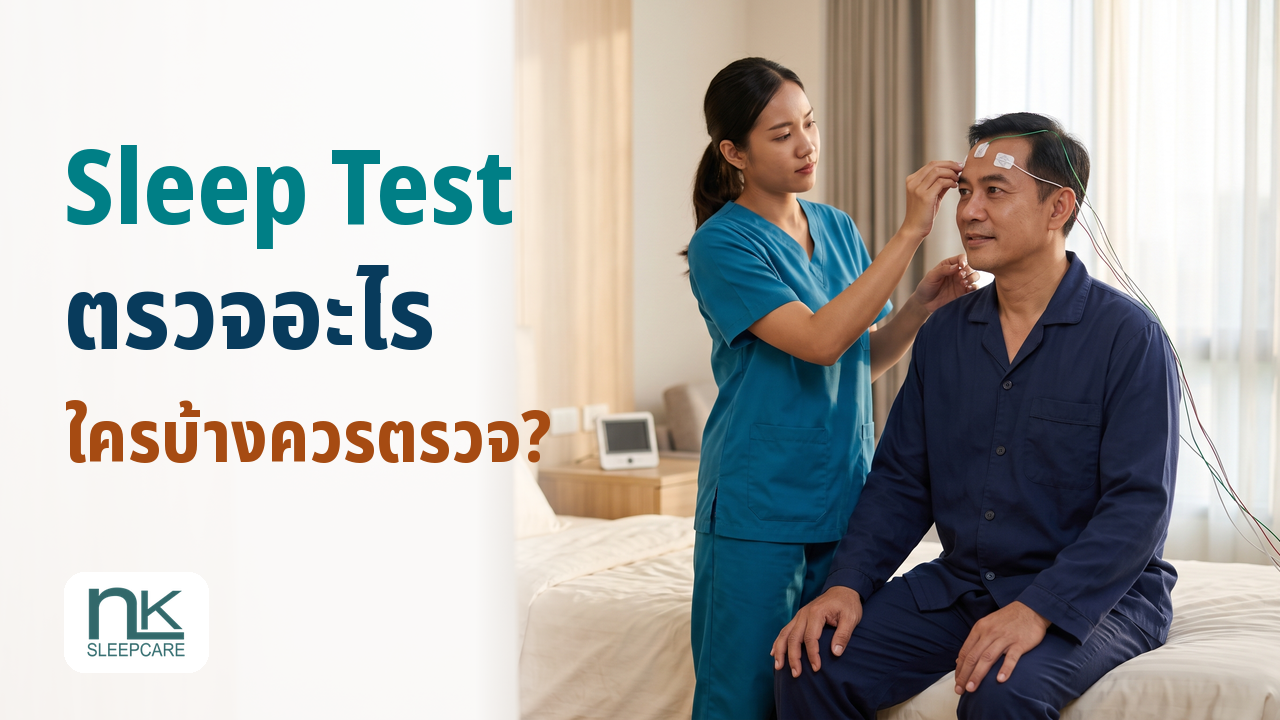
A sleep test is a method of recording bodily functions during sleep to help doctors assess and diagnose sleep problems. Different types of tests collect different amounts of data. Polysomnography (PSG), performed at a center or hospital, collects data from multiple systems, while home sleep apnea tests (HSAT) are used in some adults and focus on recording breathing and oxygen levels.[1,4]
Results from the machine alone are not enough to diagnose the condition. Doctors must consider the patient's history, symptoms, assessments, and follow-up. Similarly, a questionnaire alone cannot confirm obstructive sleep apnea (OSA).[1,2]
While some adults can perform home sleep tests, HSAT is not suitable for everyone and doesn't provide a complete diagnosis like PSG. If a single HSAT test yields a negative, inconclusive, or insufficient result, guidelines recommend continuing with a PSG for diagnosis. A home test result should not be used to rule out OSA, and repeating an HSAT should not be considered the standard procedure.[1,3]
What is a sleep test, and what questions can it answer?
A sleep test records what happens to your body during sleep, and this information is then used by doctors to answer medical questions such as whether you have sleep apnea, what kind of tests are needed to identify suspected problems, and whether the data is consistent with your symptoms or co-existing conditions.[1,4]
PSG testing at a center may record brain waves, eye and muscle movement, heart rate, breathing, leg movement, and blood oxygen levels. HSAT typically collects less data, focusing on signals related to breathing and oxygen levels. The number and type of sensors depend on the device, so it's important to avoid assuming all sleep tests are the same.[3,4,6]
A sleep test is not a general health check that everyone can choose to do themselves. The selection of what test to do should begin with the question of what condition the doctor suspects and what type of information is needed to aid in diagnosis. Importantly, questionnaires should not be used as a substitute for assessment and diagnosis.[1,2]
What symptoms or situations warrant discussing testing with your doctor?
Symptoms that should be discussed with a doctor include: regularly loud snoring, someone close to you noticing pauses and restarts in your breathing, gasping or feeling like you're choking on air while sleeping, and excessive daytime sleepiness or fatigue despite having the opportunity to get enough sleep. Snoring, abnormal breathing during sleep, or excessive daytime sleepiness may lead your doctor to consider you at risk of OSA, but a single symptom is not proof of the disease.[1]
If you experience unusual movements or behaviors during sleep, such as excessive limb twitching, sleepwalking, or events you cannot remember, you should describe them in detail to your doctor. Such movements or behaviors may require evaluation for other sleep disorders, and the HSAT, designed to assess OSA, may not be sufficient to answer this question.[3,4]
Before discussing a sleep test with your doctor, try noting how often your symptoms occur, when they start, if anyone has noticed anything while you sleep, and how drowsy or difficult you feel the next day. You should also have a list of any underlying medical conditions, medications you are taking, and information from close family members (if any) ready. These records will help your doctor choose the most appropriate assessment method, rather than simply selecting a test based on package names or questionnaire results.
What is the difference between getting tested at a center and getting tested at home?
The key difference between PSG and HSAT isn't just the testing location, but also the data measured, the availability of monitoring staff, and its suitability for each individual's medical questions. Therefore, doctors must choose the testing method based on symptoms, risk factors, comorbidities, and ability to use the equipment; they shouldn't decide based solely on convenience.[1,3]
Polysomnography (PSG) in a center or hospital.
PSG (Sleep Monitoring) is a multi-system data collection method that monitors signal quality throughout the night and assists in resolving issues if sensors become disconnected. This type of monitoring records data that many HSAT (Sleep Acupressure) models cannot measure, such as brainwaves and sleep stages, thus providing a broader assessment of sleep problems.[1,4]
The guidelines recommend using PSG instead of HSAT in adults with any of the following conditions: major heart or respiratory disease, suspected neuromuscular weakness, hysterosalpingia or suspected sleep apnea, ongoing opioid use, a history of stroke, or severe insomnia, because in these cases, the limitations of HSAT may not adequately answer medical questions.[1]
Home Sleep Apnea Test (HSAT)
HSAT is an optional test for some adults without complications and with symptoms indicating a moderate to severe risk of OSA. This test should be ordered by a healthcare provider after an assessment of the patient's history and symptoms. Self-testing using a dedicated device should not be attempted or self-administered.[1,2]
HSAT devices measure less data than PSG, and many models cannot distinguish actual sleep time from wake time. Incorrect installation, loose cables or sensors, or incomplete data may result in underestimated or incomplete diagnoses. Qualified personnel should review raw data and interpret results; relying solely on the device's automated score for diagnosis or treatment selection is insufficient.[1,2,3,5]

What are Type 1, 2, 3, and 4?
The terms Type 1 to Type 4 refer to a system for categorizing sleep studies, based on what signals are recorded and whether a human operator is present during the study. The Type number therefore provides a general overview of the study's characteristics and does not necessarily rank different types of studies as more accurate or better.[1]
Type 1 (Type I): A complete PSG (Sleep Tracking) test at a center or hospital involves technical staff monitoring signal quality overnight, recording brainwaves, eye and muscle movement, breathing, oxygen levels, heart rate, and other data according to the monitoring plan. This allows for the determination of when a person is asleep or awake and what sleep stage they are in.[1]
Type 2 (Type II): This system uses the same signaling system as PSG Type 1 according to this classification, but without nighttime monitoring, allowing for monitoring outside the sleep center. However, if a sensor malfunctions or the signal is abnormal, there may not be personnel available to resolve the issue immediately. Therefore, using the same signaling system as PSG Type 1 does not mean that the results will be the same for everyone or in every situation.[1]
Type 3 (Type III): PSG (Post-Sleep Graves) collects limited data on cardiovascular and respiratory systems, such as airflow through the airways, force of breathing, oxygen levels, and heart rate or electrocardiogram (ECG). Generally, PSG brainwave data is not available, so it may not be possible to distinguish between actual sleep and wakefulness. Therefore, the results must be interpreted in conjunction with symptoms, signal quality, and a physician's assessment.[1]
Type 4 (Type IV): Data is collected from only 1-2 sources, such as oxygen levels along with heart rate, or some devices only measure airflow through the airways. Therefore, the data is more limited than other types of testing, and results from only a few signals should not be used to self-diagnose or rule out OSA.[1]
The classification from Type 1 to Type 4 shows that each test collects different data, but the type number alone doesn't indicate which method is best for each individual. Therefore, doctors must choose the testing method based on the symptoms, risk factors, comorbidities, and sleep problems being assessed.[1]
What will the doctor and examination team assess before the examination?
Before opting for a Sleep Test, doctors will typically ask about symptoms, sleep patterns, underlying medical conditions, medications you are taking, and any other sleep problems that may be related. Some clinics may also require you to complete a questionnaire to assess risk or help organize information, but questionnaire scores are not a diagnosis of OSA.[1,2]
The physical examination and the questions actually asked vary from person to person. The physician will determine whether to use a PSG or HSAT based on the medical questions requiring answers, risk factors, comorbidities, and the availability of the equipment. The treatment team may perform a physical examination or request additional information depending on the suspected issues. Therefore, the choice of test should not be based on a standardized procedure used for everyone.[1]
If you are taking any regular medication or sleeping pills, please inform the examination team or your doctor before the examination date. Do not stop, increase, decrease, or change your medication on your own in preparation for the examination. Only follow the instructions of your doctor or the medical facility responsible for the examination.[3,4,7]

What happens on the night of the Sleep Test?
The actual procedure for a sleep test depends on the type of test and the medical facility's guidelines. Once you have an appointment, you should ask about the required arrival time, what to bring, any necessary medications to take on the day of the test, and how to contact them if the equipment installation is unsuccessful. General descriptions in this article should not replace the specific instructions provided by the testing team.
If the test is done at a center or hospital.
Typically, patients arrive in the evening, change into pajamas, and staff attach sensors to their head, face, chest, legs, and fingertips, depending on the type of test. Attaching the sensors is usually painless, but it may feel unfamiliar, and some people may experience slight skin irritation from the adhesive.[4,6,7]
The sensor cable has enough room for movement. Technical staff will monitor the signal and assist if the sensor comes loose or if the person needs to get up to go to the bathroom. Some locations use low-light cameras to track movement and gather data.[4,7] In some eligible and appropriate cases, your doctor may plan to split the examination into two sessions overnight (split-night), but this is not a procedure performed on everyone.[1]
If testing at home.
The inspection team should explain how to attach the sensors, power on the device, check the signal, and return the equipment. The person being inspected should attach the device as instructed and go to bed as close to their normal sleep time as possible. If unsure whether the cables or sensors are properly attached, use the service provider's contact information instead of modifying the device yourself.[2,3]
If the initial HSAT is incomplete, the signal is lost, or there is insufficient data, the results may not be sufficient for diagnosis. The guideline recommends performing a PSG (Problem Solving Group) afterward. Repeating HSAT is not recommended as a standard response when the results are negative, inconclusive, or the data is insufficient.[1,3]
How to prepare for a Sleep Test.
The most important thing is to get specific advice from your doctor and the medical facility, as the type of test and each person's health condition are different. The list below is for general preparation and can be used as a basic guideline before asking the testing team for more information.
- Maintain a regular routine and go to bed at the same time as much as possible.[4,7]
- Avoid midday naps or keep them to a minimum, as advised by the inspection team.[4]
- Avoid caffeine after lunch, and avoid alcohol or sedatives unless otherwise directed by your doctor.[3,4]
- Avoid using hair sprays, gels, or oils, as well as lotions and cosmetics that may interfere with sensor attachment. If you wear artificial nails, use topical medications, or have any skin concerns, consult a medical facility first.[4,7]
- Prepare your pajamas and nightly essentials according to the list provided by the medical facility.[4,7]
- Inform the investigation team about any medications you are taking and any allergies to adhesives.[4,7]
- Do not stop or change your medication on your own. Use medication only as directed by your doctor.[3,4,7]
Each medical facility may have different preparation guidelines. If you have questions about diet, exercise, medication, or sleep, you should ask the examination team directly before your appointment.
After the test, who reads the results, and what should I do if the test results at home are unclear?
After the test, the staff will check the signal quality and organize the data for a doctor or qualified person to interpret the results. The time frame for receiving results varies depending on the medical facility, so you should ask when the results will be ready, who will explain them, and what information you need to prepare for further discussion.[2,3,4]
For adults, if a single HSAT result is negative, inconclusive, or insufficient, guidelines recommend performing a PSG for diagnosis. It should not be concluded that OSA is absent from a single HSAT result.[1,3] If the first PSG is negative but the doctor suspects OSA, they may consider performing a second PSG as appropriate.[1]
This article does not teach you how to use AHI, ODI, or oxygen levels to self-diagnose disease or select treatment. Each number must be interpreted in conjunction with the type of test, time of recording, signal quality, symptoms, comorbidities, and a physician's assessment.[1,2]
What questions should I ask before my appointment?
A list of pre-scheduled questions for a Sleep Test helps you understand how the proposed test will answer your questions.
- What disease does the doctor suspect, and what questions does this test answer?
- Should you get tested at a center or at home? Why or why not?
- What data will the device measure, and what data will it not measure?
- If the signs are incomplete or the result is negative but the symptoms persist, what is the next step?
- What should I do about the medication I'm currently taking, and who ordered the adjustment?
- Does the cost include equipment installation, doctor's fee for interpreting results, and follow-up appointments?
- If using healthcare benefits, what referral letters or procedures are required, and how should I verify this with the relevant agency before making a payment?
- Who will review the data quality, interpret the results, and explain the next steps?
Pricing details, lists of healthcare facilities, and eligibility criteria for healthcare services may change. This overview article therefore does not include fixed prices, packages, appointment schedules, or eligibility conditions. Please check current information with the healthcare facility and your insurance provider before making an appointment or payment.
Frequently Asked Questions about Sleep Tests
Does a sleep test hurt?
Attaching sensors for PSG and HSAT is generally painless. You may feel some discomfort from the wires or adhesive, and some people may experience temporary skin irritation. If you have a history of adhesive allergies or sensitive skin, please inform the team before device installation.[4,6]
If I didn't get enough sleep on the night of the test, would the results still be valid?
Sleeping less than usual on the night of your test doesn't always mean the results are invalid, and not everyone needs to get eight hours of sleep. Your doctor will consider your actual sleep time, signal quality, and the questions you need answered. If there's insufficient information, the testing team will advise you on what to do next. You shouldn't judge the quality of the results based solely on the number of hours slept.[4]
Can everyone get tested at home instead of at a testing center?
No, HSAT is suitable for some adults without complications and with moderate to severe OSA risk. For those with any of the following conditions, guidelines recommend PSG instead of HSAT: major heart or respiratory disease, suspected respiratory muscle weakness due to neuromuscular disease, hysteria or suspected sleep apnea, ongoing opioid use, history of stroke, or severe insomnia.[1]
A negative home test result means I don't have OSA, right?
No, for adults, a single negative HSAT result, an inconclusive result, or insufficient data cannot be used to rule out OSA on its own. Guidelines recommend continuing with a PSG for diagnosis and not repeating the HSAT, nor considering a single negative result as grounds to stop follow-up.[1,3]
Do I need to stop taking any medication or sleeping pills before the test?
Do not stop, increase, decrease, or change your medication on your own. If you are taking regular medication or sleeping pills, inform the monitoring team or your doctor and follow the specific instructions given.[3,4,7]
Can I use an OSA diagnostic questionnaire?
No, a questionnaire alone cannot diagnose OSA. Appropriate PSG or HSAT (Prophylaxis and Diagnostic Assessment) are required in conjunction with a medical evaluation.[1]
Do I need to have a sleep test before starting CPAP?
There's no one-size-fits-all answer to this. Before starting CPAP, physicians must consider appropriate assessment results and test data. They shouldn't rely solely on symptoms, questionnaires, automated scores, or the information in this article to decide on treatment. The physician will determine which tests are necessary and what data to use to plan treatment based on each individual's context.[1,2]
summarize
Sleep tests collect data during sleep to help doctors assess and diagnose sleep problems; it's not just a machine-based answer. PSGs at data centers utilize multiple systems and are monitored by staff. HSATs are an option for some adults without complications and with symptoms indicating moderate to severe OSA (Obstructive Sleep Apnea). It's not a substitute for PSGs for everyone.[1,2,4]
Before testing, prepare information about your symptoms, underlying conditions, and medications you are currently taking, and follow the instructions of the testing team. Do not make your own decisions regarding stopping medication, choosing the type of test, diagnosis, or adjusting treatment. For adults, if a single HSAT result is negative, inconclusive, or there is insufficient information, the guidelines recommend performing a PSG for further diagnosis.[1,3]
This information is for general informational purposes only and does not replace a medical diagnosis or advice. If you suspect you have sleep apnea, experience abnormal sleep patterns, or feel excessively drowsy that compromises your safety, consult a doctor or sleep specialist.
Sources of information
- Clinical Practice Guideline for Diagnostic Testing for Adult Obstructive Sleep Apnea, American Academy of Sleep Medicine, 2017
- Clinical use of a home sleep apnea test: an updated AASM position statement, American Academy of Sleep Medicine, 2018
- Home Sleep Apnea Test, Sleep Education by AASM, updated August 2020
- Sleep Study, Sleep Education by AASM, September 2020
- A patient's guide to understanding diagnostic testing for obstructive sleep apnea in adults, American Academy of Sleep Medicine
- Sleep Studies, National Heart, Lung, and Blood Institute, updated March 24, 2022
- Sleep Study, MedlinePlus, US National Library of Medicine