
What is sleep paralysis? Waking up but unable to move, is it dangerous, and how should you deal with it?
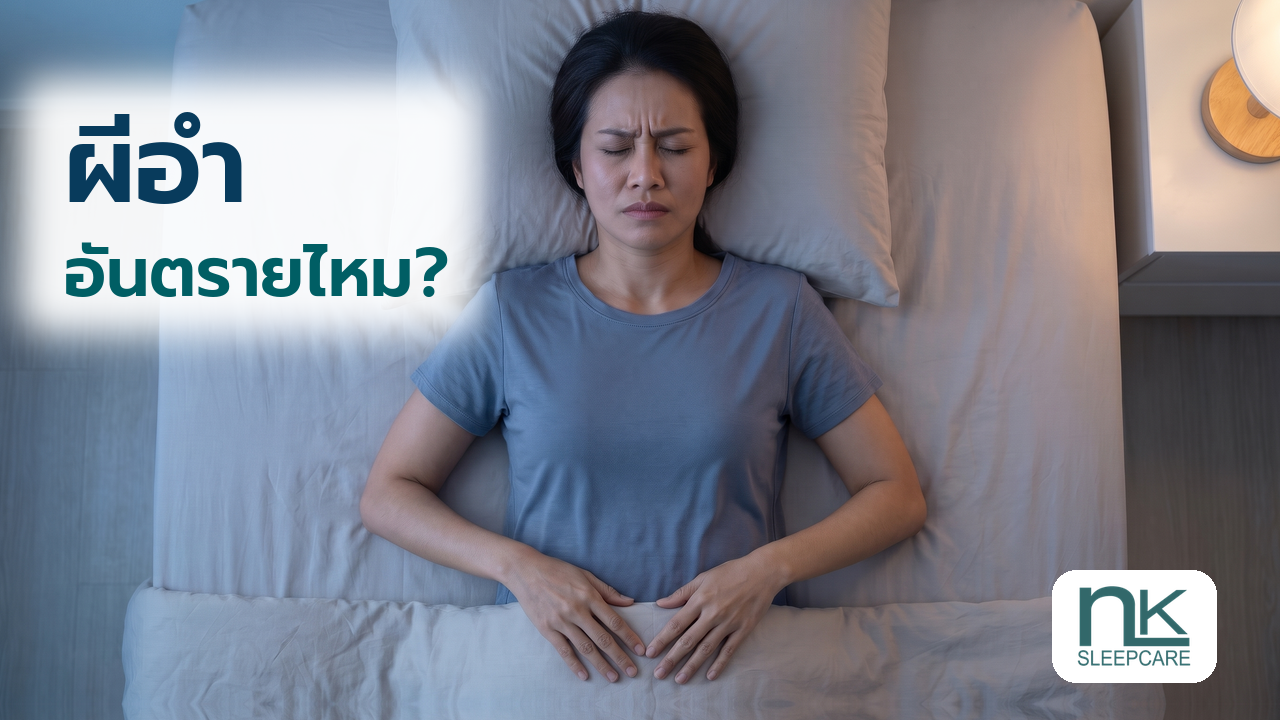
Waking up in the middle of the night or near dawn, fully aware that you are lying in bed, but unable to move your arms and legs. You can't call out to anyone, and some people even feel like someone else is in the room with them. In Thailand, this experience is called "sleep paralysis," while medically it's considered a relatively common condition. [1][2]
If the symptoms occur briefly while sleeping or awake and disappear when fully awake, sleep paralysis, while frightening, is not a serious medical risk in itself. [1][3] Sudden inability to move or weakness while awake is a separate issue and should not be mistaken for sleep paralysis. Emergency medical assistance should be sought immediately. [5]
What is sleep paralysis? Why are you conscious but unable to move?
Sleep paralysis is a condition where a person is temporarily unable to move their body or speak while sleeping or awake, while still being conscious and aware of their surroundings. The symptoms usually last a few seconds to a few minutes and then disappear on their own. [1][2][3]
Symptoms that many people describe.
During sleep paralysis, the person is unable to move their arms, legs, torso, or head. They cannot speak or make any sound, and may not be able to open their eyes. The feelings that often follow are shock and fear. Some people feel as if someone is in the room or something is pressing down on them. Some see, hear, or feel things that aren't there, which are hallucinations that can occur alongside sleep paralysis, but they don't affect everyone. [1][3]
How is sleep paralysis related to dreaming?
During REM (Rapid Eye Movement) sleep, the brain causes the muscles in the arms, legs, and torso to relax and remain still, preventing the body from moving in response to dreams. Sleep paralysis occurs when the brain is awake, but the muscles are still relaxed like during REM sleep, so the person is conscious but unable to control their body movements. [2][3]
The belief in sleep paralysis and its medical explanation.
Sleep paralysis is both frightening and difficult to understand. Besides being unable to move, one may also feel the presence of someone nearby. It's no wonder that many people seek explanations based on their own beliefs, and these beliefs should be respected. From a medical perspective, this condition is explained by the functioning of the brain and muscles during the transition between sleep and wakefulness. [4]
The fear associated with sleep paralysis is a common symptom. Many people are hesitant to talk about it due to embarrassment or concerns that they are losing their mind. These anxieties are normal and can be discussed with a doctor. Understanding the mechanisms that trigger the symptoms can help reduce both fear and shame. [4]
Is sleep paralysis dangerous?
Common sleep paralysis, which is a brief episode that occurs during sleep or wakefulness and then disappears on its own, is not a serious medical risk in itself. [1][3] More important issues are often indirect consequences, such as a fear of going to bed, avoiding sleep, sleep deprivation leading to fatigue, or anxiety that affects daily life. If you start experiencing these symptoms, you should schedule a consultation with a doctor. [1][4]
However, if you experience sudden inability to move or weakness while awake, or if the weakness persists even after fully waking up, do not assume it's sleep paralysis. Seek immediate emergency medical assistance, especially if your face is distorted or you experience weakness in one arm, you have difficulty speaking, breathing, or swallowing, or if weakness occurs following a head, neck, or back injury. Do not drive yourself to the hospital. [5][8] For weakness that develops gradually, worsens over time, or comes and goes, you should schedule an appointment with a doctor to determine the cause. [5]
What can cause sleep paralysis to occur more frequently?
It is not yet clear why some people experience sleep paralysis, but it has been found to be related to these factors. [1][2][3]
- Not getting enough sleep, or having trouble sleeping.
- Irregular sleep patterns, such as those caused by working shifts or traveling across time zones.
- stress
- Lie on your back
- Someone in my family has experienced sleep paralysis.
Sleep paralysis can also occur in conjunction with other conditions, such as narcolepsy, certain mental health conditions (like post-traumatic stress disorder or PTSD, anxiety disorders, and panic disorders), as well as the use of certain medications or substances. However, the presence of these conditions does not necessarily mean they are the cause, and experiencing sleep paralysis does not automatically mean you have any of these conditions, as even people with no other medical conditions can experience it. [1][2][4]
What should you do during and after sleep paralysis?
Common cases of sleep paralysis usually resolve on their own after a short time, and there is no way to completely stop it every time. Therefore, the focus should be on managing the fear. [3][6] But if you are fully awake but still unable to move or feel weak, you shouldn't wait and see; seek medical help immediately. [5]
- Between: Tell yourself that this is sleep paralysis and it usually goes away on its own. Try not to panic. [2][3]
- Try moving it little by little: Trying to move your body may help relieve symptoms. Some people find that intentionally moving small parts of their body, such as their fingers, helps them recover faster, but this method doesn't work for everyone or every time. [3][6]
- After waking up: You might feel tired, confused, or still scared. Give yourself time to calm down, rest more if needed, or talk to a close friend or family member. [6]
- If it's a recurring issue: Record the date and time, sleeping position, sleep patterns the previous night, stress levels during that period, and medications you are taking. This record helps you identify patterns and can be used to explain to your doctor. [3]
- For the person sleeping next to you: If you suspect someone is experiencing sleep paralysis, you can gently touch them or call their name. Touching or speaking to them may help stop the symptoms. People experiencing sleep paralysis often cannot communicate or signal until the symptoms have passed. [3][6]
How to reduce the chances of recurrence?
Adjusting your sleep habits may help reduce the chances of experiencing sleep paralysis repeatedly, especially if it often occurs when you're sleep-deprived or have irregular sleep patterns. [1][2][3]
- Get enough sleep regularly.
- I go to bed and wake up at about the same time every day.
- If you notice that it usually happens when you lie on your back, try sleeping in a different position instead.
- Avoid heavy meals, alcohol, caffeine, and cigarettes close to bedtime.
These methods help reduce the chances, but they don't guarantee that sleep paralysis won't return. [1][6] If you want to gradually adjust your sleep schedule, light, screen time, and bedroom, read on. What is sleep hygiene? How to take care of your sleep hygiene.
When should you consult a doctor, and what might the doctor assess?
If sleep paralysis occurs only occasionally and disappears on its own upon waking up fully, medical attention is generally not necessary unless it begins to affect sleep or mental health. [1][3] Any inability to move or weakness that occurs suddenly while awake, or persists even after fully waking up, should not be delayed by waiting for a doctor's appointment. Seek emergency medical assistance immediately. [5]
What symptoms warrant a doctor's appointment?
You should schedule a medical appointment for sleep paralysis (not an emergency) if any of the following occur: [1][2][3]
- It happens repeatedly, causing great anxiety or fear of going to bed.
- Insufficient sleep or persistent fatigue can occur due to disrupted sleep.
- Feeling unusually sleepy during the day. Read more. What causes excessive sleepiness during the day?
- Muscle weakness that occurs suddenly when laughing or experiencing intense emotion. [9]
- If symptoms start after beginning a new medication or changing medications, you should talk to your doctor first. Do not adjust or stop medication on your own.
- There may also be associated stress, anxiety, or other significant mental health issues.
What questions might the doctor ask?
When consulting about sleep paralysis, doctors usually begin by taking a history, such as when it started, how often it occurs, how long each episode lasts, sleeping habits, health history, medications and substances used in the past and present, other sleep problems, and whether there are any family members with sleep problems. They may have the patient complete a sleep questionnaire or keep a sleep journal to identify patterns. An honest account, including what they saw or heard during the episode, will help in a more accurate assessment. [2][3]
Do all people who experience sleep paralysis need to take a sleep test?
It's not necessary. Most cases of sleep paralysis can be assessed by doctors based on a detailed history and questioning of symptoms, without the need for a sleep study. Fear, frequency, or severity alone doesn't automatically necessitate a study. Doctors will consider ordering a study if they suspect another sleep disorder, such as symptoms suggestive of narcolepsy, or if the history alone doesn't clearly differentiate it from other conditions. [2][3][4] If your doctor deems testing necessary, read the basic information here. What does a sleep test check, and who should get it?
Treatment for sleep paralysis that disrupts life.
Most cases of sleep paralysis do not require specific treatment. If the symptoms begin to interfere with your life, your doctor may start by addressing related factors such as insufficient sleep, insomnia, or co-existing mental health conditions. Cognitive Behavioral Therapy (CBT) may be recommended, and in some cases, a sleep specialist may consider medication. However, this must be done under a doctor's supervision; self-medication is not recommended. [1][2][3]
Frequently asked questions about sleep paralysis.
Does being possessed by a ghost mean having narcolepsy?
In most cases, no. Sleep paralysis is relatively common and can occur in people without other underlying conditions. Narcolepsy, however, is less common. Sleep paralysis can be a symptom of narcolepsy, but narcolepsy is usually accompanied by other symptoms, particularly excessive daytime sleepiness and sudden muscle weakness when laughing or experiencing strong emotions. Some people may wake up frequently during the night or experience hallucinations near the time they fall asleep or wake up. However, these types of hallucinations can also occur in general sleep paralysis. Therefore, hallucinations alone cannot definitively indicate narcolepsy. [3][4][9]
If sleep paralysis is accompanied by excessive daytime sleepiness or weakness when laughing or experiencing strong emotions, you should consult a sleep specialist for evaluation. However, if there are no other symptoms of narcolepsy, a sleep study is usually not necessary. [2][3] Read more about narcolepsy here. What is narcolepsy?
How does sleep paralysis differ from nightmares or nightmares?
Sleep paralysis differs from nightmares in that during sleep paralysis, one is conscious and aware of the surroundings but unable to move. Nightmares occur while still asleep, so one is unaware of the surroundings and there is no period of consciousness but immobility. Sleep terrors are also different; people experiencing sleep terrors are often unaware of their surroundings and may scream, which is impossible during sleep paralysis. Comforting them usually doesn't stop sleep terrors, while touch or talking to them often helps end them. [4]
What does it mean to feel like you can't breathe during sleep paralysis?
The feeling of something pressing down on the chest or difficulty breathing is common during sleep paralysis. [4][6] And patient data from the American Academy of Sleep Medicine (AASM) indicates that it is still possible to breathe during sleep paralysis. [3] This description applies only to common sleep paralysis and does not guarantee that an individual's breathing, heart rate, or oxygen levels are normal.
Waking up suddenly while gasping for breath is another symptom that should be evaluated by a doctor to differentiate it from sleep paralysis, especially if accompanied by loud snoring, someone witnessing breathing stopping and starting again during sleep, or excessive daytime fatigue, as these may be related to sleep apnea. These symptoms alone are not enough for a diagnosis; the doctor will consider whether further tests are needed. [7]
If you are fully awake and can move around, but still experience persistent difficulty breathing or shortness of breath without a known cause, this is not typical sleep paralysis and you should seek medical advice immediately. [10] However, if you experience severe difficulty breathing while awake, such as gasping for breath, choking, or shortness of breath to the point of being unable to speak, or if you experience weakness along with difficulty breathing, speaking, or swallowing, seek emergency medical assistance immediately. [5][10]
summarize
Sleep paralysis is the temporary inability to move or speak while asleep or awake. It can be frightening, but it's generally not a serious risk and usually resolves on its own. Getting enough sleep, maintaining a consistent sleep schedule, and avoiding sleeping on your back may help reduce the chances of recurrence. [1][3] If sleep paralysis begins to affect your sleep or mental state, or if you experience excessive daytime sleepiness or fatigue when experiencing intense emotions, you should schedule an appointment with a doctor. [1][9] Any sudden weakness that occurs while awake is not typical sleep paralysis and requires immediate emergency medical assistance. [5]
The information in this article is general knowledge and should not replace a medical diagnosis or advice.
References
- Sleep paralysis, NHS, page last reviewed 9 September 2026
- Sleep paralysis, MedlinePlus Medical Encyclopedia, US National Library of Medicine
- Sleep Paralysis, Sleep Education by American Academy of Sleep Medicine, August 2020
- Sharpless BA. A clinician's guide to recurrent isolated sleep paralysis, Neuropsychiatric Disease and Treatment, 2016;12:1761–1767, doi:10.2147/NDT.S100307
- Paralysis, NHS, page last reviewed 17 July 2023
- Sleep Paralysis, Cleveland Clinic, last updated July 3, 2024
- Sleep apnoea, NHS, page last reviewed 11 May 2026
- Symptoms of a stroke, NHS, page last reviewed 12 September 2024
- Narcolepsy, NHS, page last reviewed 9 September 2026
- Shortness of breath, NHS, page last reviewed 30 January 2024


