Is your CPAP mask leaking? Where to check and how to fix air leaking into your eyes.
Last updated:
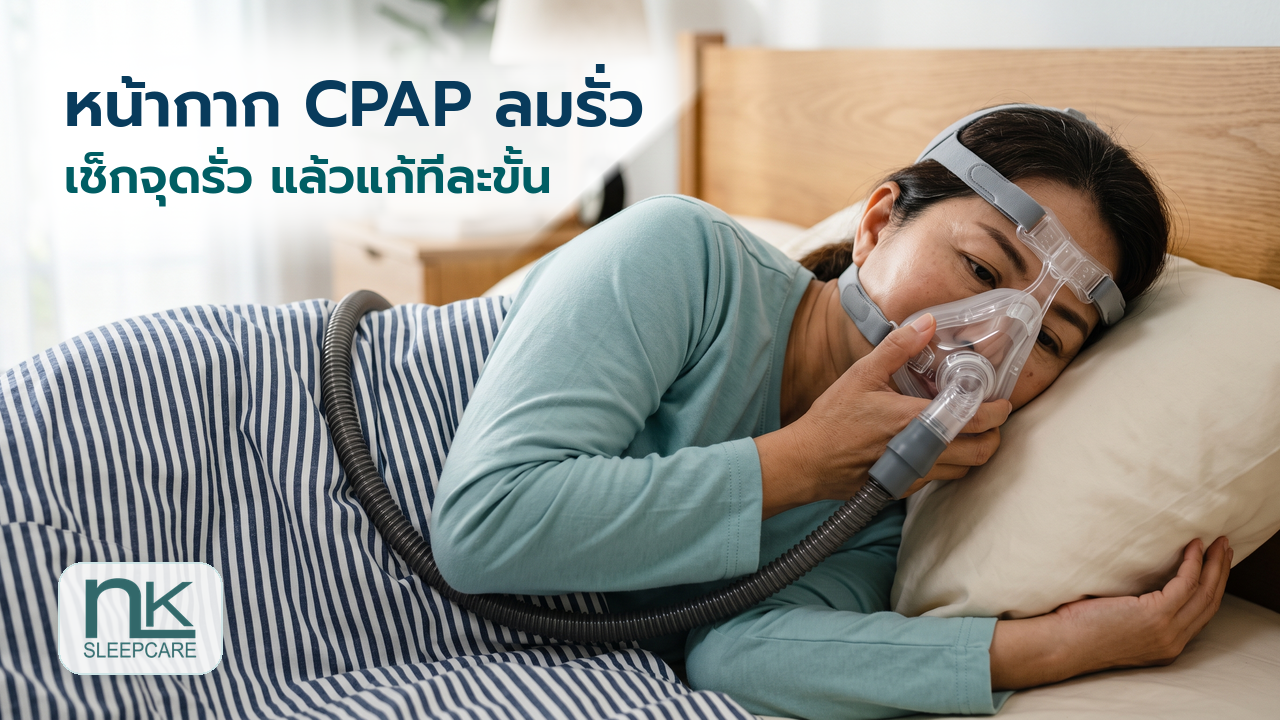
Are you sleeping soundly only to be startled awake in the middle of the night by a hissing sound of air leaking near your ear, or by air blowing into your eyes, causing irritation and dryness? Have you tried tightening your CPAP mask straps until your face is sore and red, but the air is still leaking?
If you're experiencing this, you're not alone. Air leaks from the mask are a common problem for CPAP users. Data cited by ResMed from a survey of 151 former CPAP users in January 2014 found that 45% reported difficulty achieving a tight mask seal as a reason for discontinuing use. Therefore, air leaks should be addressed early on, before using the machine every night becomes difficult.
The good news is that many cases resolve themselves with proper mask wearing, adjustment, and cleaning. This article from NK Sleepcare helps you check for common air leaks and provides step-by-step solutions, including how to address air leaks into your eyes and unusual noises, so you can get back to using your mask properly.CPAP machine I feel more comfortable now.
Three main reasons why CPAP masks leak.
- The mask size is not right or it's being worn incorrectly (Poor Fit & Sizing): Choosing a mask size that is too large or too small for your face shape will create gaps around the sides of your nose and mouth. Additionally, wearing the mask inside out or letting it hang loose can also contribute to problems. The CPAP mask strap is loose. Unknowingly
- The mask is dirty or has accumulated grease: Oily residue from the face and dirt accumulating on the mask cushion, the part that comes into contact with the face, can cause the cushion to not fit properly and lead to air leaks. If your mask, which previously fit perfectly, starts leaking after several days or weeks of use, it may be because the cushion needs more regular cleaning.
- Air leaking from the mouth (Mouth Leak): This is common in people who breathe through their mouth or open their mouth while sleeping, but use a nasal mask or nasal pillow. When the mouth is open, the air that enters through the nose will exit through the mouth instead.
Two ways to check for air leaks and noises in your CPAP mask yourself.
- Use the diagnostic tool on your device or in the app: Some devices and apps have a mask fit check system, such as the ResMed myAir app used with certain models, which will notify you of air leaks and provide mask adjustment instructions. Air leak readings and the threshold for excessive leakage vary depending on the model, so consult the user manual for your device.
- Use your hand to feel for leaks and distinguish normal sounds from abnormal ones: Put on the mask and turn on the device as usual. Then, feel around the edges of the seat and joints with your hands. Air coming out of the vents is normal. However, air leaking from the edges of the seat, such as around the nose, eyes, or lips, is the issue that needs to be addressed. If there is unusual noise but no air leaks are found around the edges of the seat, check the mask's manual to ensure that the elbow and ports cap (for models with these) are properly installed. Check for dirt or condensation in the vents and whether the outer lining of the seat is torn. If there is condensation, gently tap the mask to remove the water. If the vents are dirty, clean them with a soft-bristled brush according to the manual and air dry them without direct sunlight.
5 Ways to Fix a Leaking CPAP Mask for a Secure Fit and Comfortable Sleep.
If you check and find a leak, try following these steps in order. Start with the first two steps, which are basic and don't require buying anything extra. Then, address the specific leaks, both those around the mouth and those getting into the eyes. For an overall picture...Problems with CPAP masks: leaking mask, air blowing into the eyes. And for other common issues users encounter, please read more in our article summarizing frequently asked questions.
- Remove and reattach the straps correctly, and adjust them to your actual sleeping position: Before buying new equipment, try removing the mask and checking that the padding is correctly positioned on the mask frame and not crooked. Make sure all parts are assembled correctly according to the manual. Place the padding onto your face before tightening the straps. If you pull the mask down before the padding is properly in place, the edges of the padding may fold or roll up, causing air leaks. Then, turn on the device and lie down on a pillow in your normal lying position. Try turning to your side as well, as the mask may conform to your body differently than when sitting. Gradually adjust the straps on both sides to be even, tightening them only enough to provide a snug fit, not so tight that it causes pain or leaves marks.
- Clean your mask cushion regularly: Cleaning instructions for CPAP mats vary depending on the model, so check your mask's manual first. If the manual allows washing, clean the mat every morning with baby shampoo or mild soap to remove facial oils, and rinse the entire mask with mild soapy water once a week. However, some mats should not be exposed to water, such as the ResMed AirTouch F20 mat, which the manual recommends wiping with alcohol-free CPAP mask wipes instead.
- If air is leaking from your mouth, try using the chin strap: This is an option for people who open their mouths while sleeping but still want to use a mask that covers the nose or fits through the nostrils. The chin strap helps support the jaw to keep the mouth closed, but many people find it too tight or don't want an extra strap on their face. If it's uncomfortable, there's the next option.
- If you frequently experience breath leakage from your mouth, a full-face mask is an option because it covers both the nose and mouth. You should choose the right model and size in consultation with your doctor or healthcare provider, as mask sizing varies between models. What fits one model may not fit another.
- If air leaks into your eye: Try pulling the cushion slightly away from your face to inflate it, then return the mask to its original position as per the instructions. If leakage persists, gradually adjust the adjustment points on your mask model. For example, with ResMed masks that have a MicroFit dial, the instructions instruct you to adjust the dial first. If leakage still occurs at the eyes, then slightly tighten the upper strap. Other mask models may have different adjustment points; consult the manual for that specific model. Adjust the straps only until they fit snugly, not so tightly that they cause discomfort. If leakage still occurs at the eyes after adjustment, it may be due to an incorrect sizing. Have a healthcare provider help check your face size against the size chart for your model.
When should I replace my mask cushion?
The mask cushion is a replacement part that needs to be changed periodically. The replacement schedule should follow the manufacturer's specifications for that particular mask model. If the cushion previously fit well but now leaks frequently despite cleaning and reinstalling as described above, inspect its condition. If the outer membrane is torn, the cushion should be replaced.
Another sign not to be overlooked is that you have to tighten the straps more and more to control the air leak. Tightening it too much isn't the solution and may cause facial pain or redness. Have your seat inspected or check if the size is still correct.
Read more Experiencing nasal pain or facial redness/bruising from CPAP use? Here are ways to adjust the mask and tips to reduce pressure for a comfortable, blemish-free sleep.
I've adjusted it myself, but it's still leaking. What should I do next?
If, after trying the steps above, air is still leaking or you still can't find a comfortable mask, consult your doctor or CPAP provider. Masks come in many styles, materials, and sizes. Trying on and checking the size with someone who can see your actual face shape can help you choose the right one.
NK Sleepcare offers nasal, full-face, and nasal pillow masks, replacement mask cushions, and headgear. Our team will help you determine the best fit and recommend options to suit your face shape and sleeping position.
If you'd like our team to help you check the fit of your sleep mask, add us on LINE @nksleepcare and tell us about any leaks, the model of mask you use, and your usual sleeping position. This will allow us to assist you with checking the fit, replacing parts, or choosing a new mask.