How to Stop Snoring: Find the Cause and Right Treatment
Last updated:
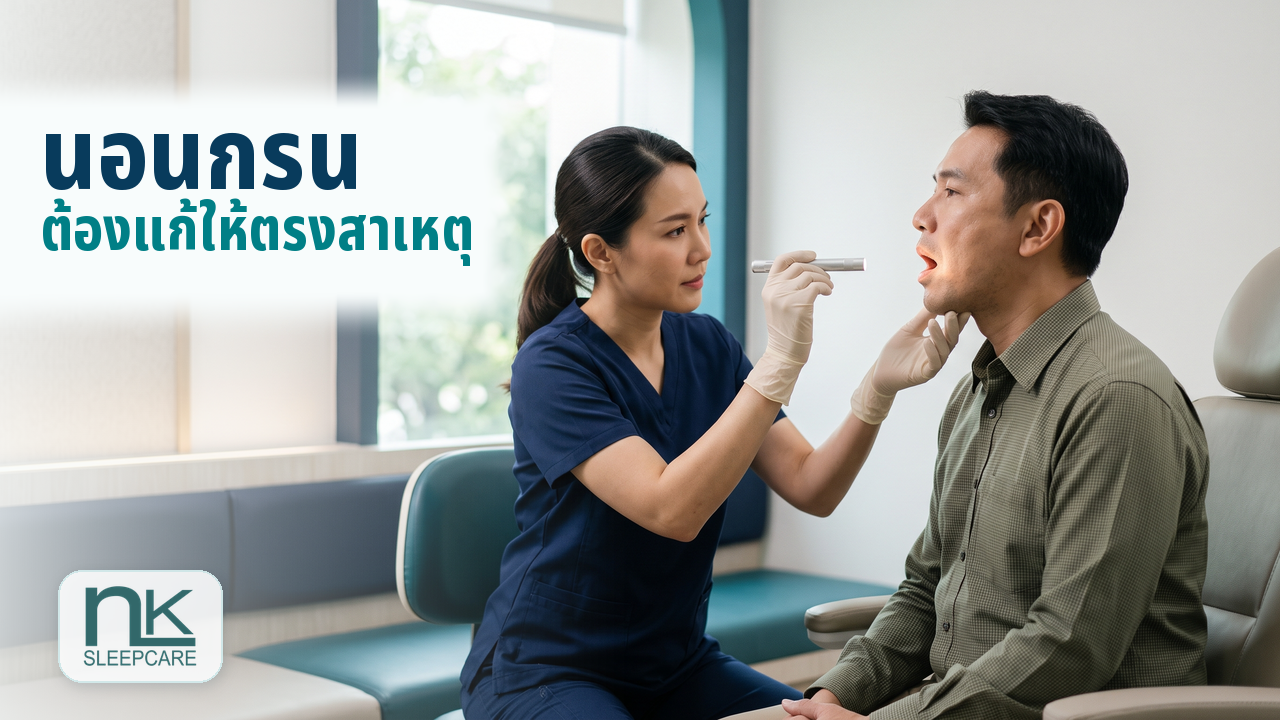
If you are looking for ways to stop snoring, start by finding the cause. Diagnosing OSA requires appropriate testing. Check for warning signs of OSA. Common contributors include sleeping on your back, drinking alcohol, excess weight, smoking, and blocked or narrow nasal airways.
Snoring can disturb the person sleeping nearby. If breathing pauses, gasping, choking, or significant daytime sleepiness are also present, seek a medical assessment. Treatment for snoring depends on the cause.
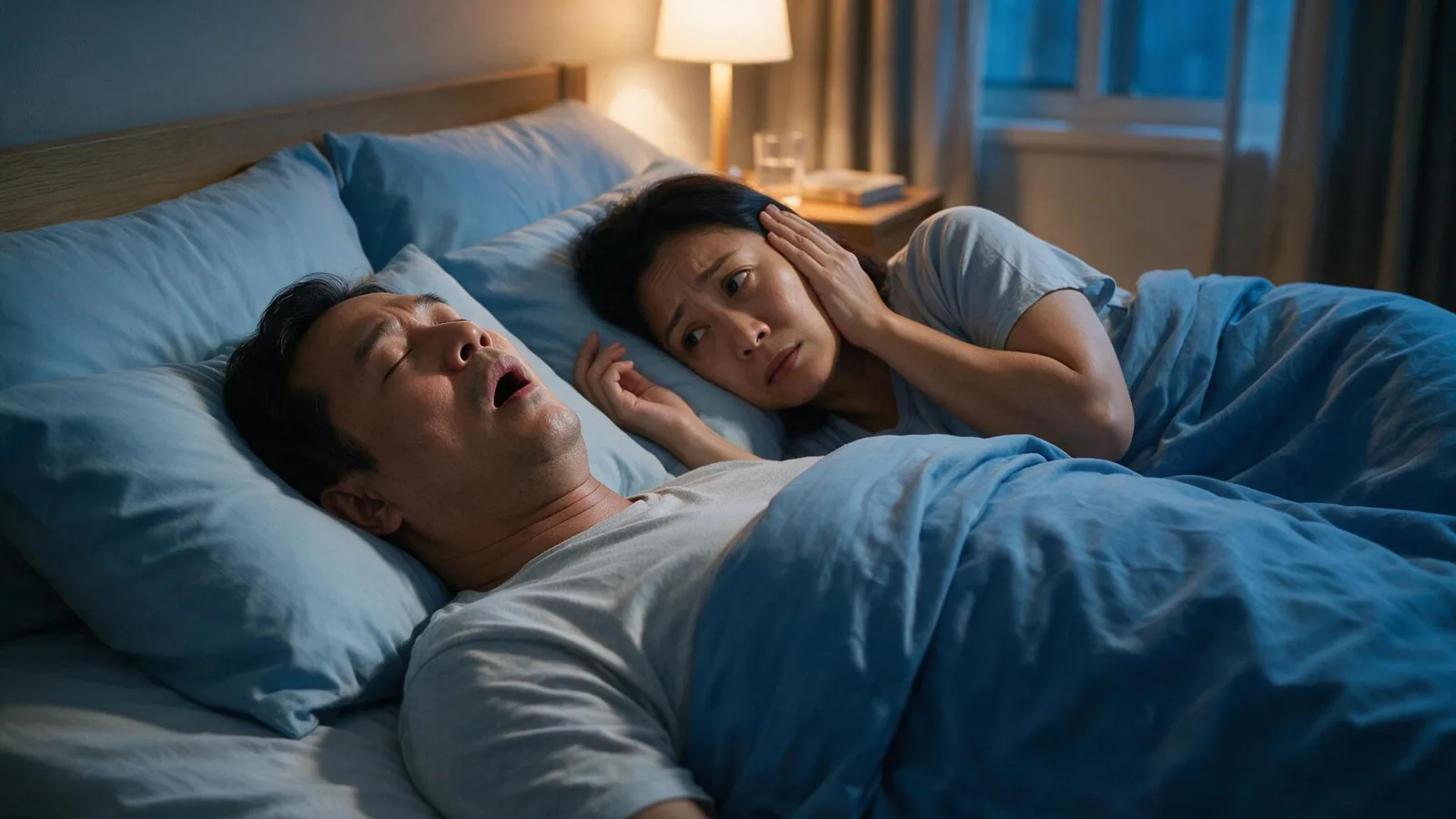
The symptom information and basic care advice are consistent with recommendations for people who snore. Confirming OSA requires an appropriate assessment and sleep study; it cannot be decided from snoring alone.
A quick guide: where to start if you snore
- If you snore only occasionally and have no other concerning symptoms, first try changing your sleep position, reducing alcohol, managing your weight if you have excess weight, and addressing nasal congestion appropriately.
- If you snore loudly and someone notices pauses in your breathing, gasping, choking, or significant daytime sleepiness, see a doctor for an assessment for sleep apnea.
- If sleep apnea is found, see the treatment sections below for the options discussed in this article.
OSA can make breathing stop and start during sleep. It can disrupt sleep and cause daytime sleepiness that affects safety. If warning signs are present, see a doctor. The type of diagnostic test should be selected after a clinical evaluation.
What causes snoring?
Snoring happens when air passes through a narrowed upper airway during sleep, making tissues in the tongue, mouth, throat, or nasal airway vibrate and create sound.
Common contributors described in patient guidance include:
- Sleeping on your back, which can allow the tongue to fall backward.
- Drinking too much alcohol or taking sleeping pills.
- Excess weight.
- Blocked or narrow nasal airways.
- Smoking.
Snoring can have different contributing factors. For more about physical structures, see Anatomical factors that can contribute to snoring.
How is ordinary snoring different from obstructive sleep apnea (OSA)?
Not everyone who snores has sleep apnea. However, snoring can be one sign of obstructive sleep apnea (OSA).
In people with OSA, breathing stops and starts during sleep. Repeated waking can disrupt sleep. Diagnostic testing should follow a comprehensive sleep assessment.
Signs that should prompt a medical assessment
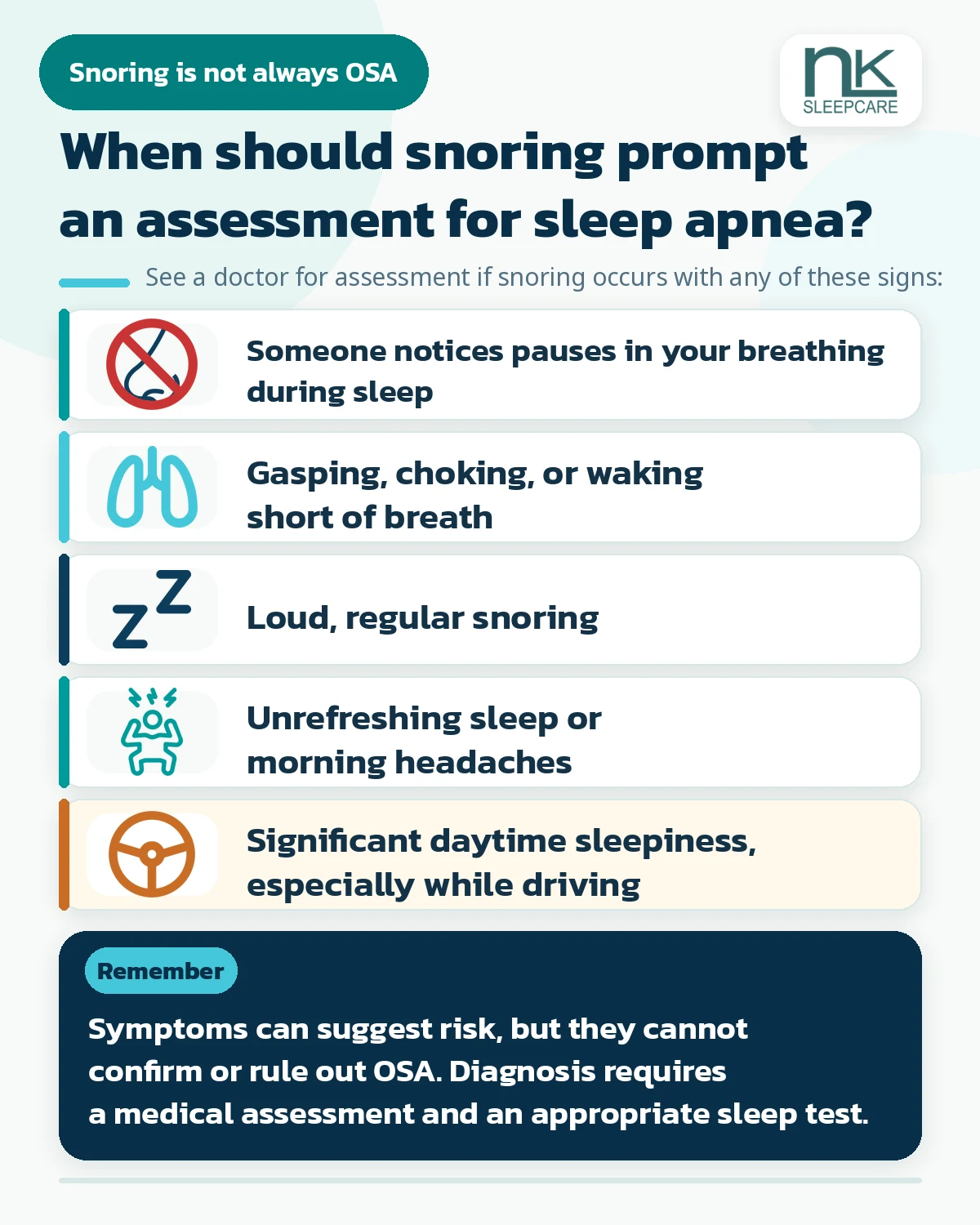
Arrange an assessment if you or the person sleeping beside you notices any of the following:
- Pauses in breathing during sleep.
- Gasping, choking, or seeming unable to breathe.
- Loud, regular snoring.
- Waking often, waking unrefreshed, or having a morning headache.
- Significant daytime sleepiness or poorer concentration.
- Feeling sleepy while driving.
If these symptoms are present, arrange a medical assessment. If sleep apnea with excessive sleepiness has been confirmed, do not drive until the sleepiness is controlled.
Basic steps that may help with snoring
For uncomplicated snoring, lower-risk lifestyle changes are a practical starting point. If warning signs of sleep apnea are present, seek an assessment.
Important: The following steps may reduce snoring for some people. They do not diagnose OSA. If someone notices pauses in breathing, gasping, choking, or significant daytime sleepiness, see a doctor.
1. Try sleeping on your side instead of your back
When you sleep on your back, the tongue may move backward and contribute to snoring. People whose snoring is clearly worse on their back may snore less when sleeping on their side.
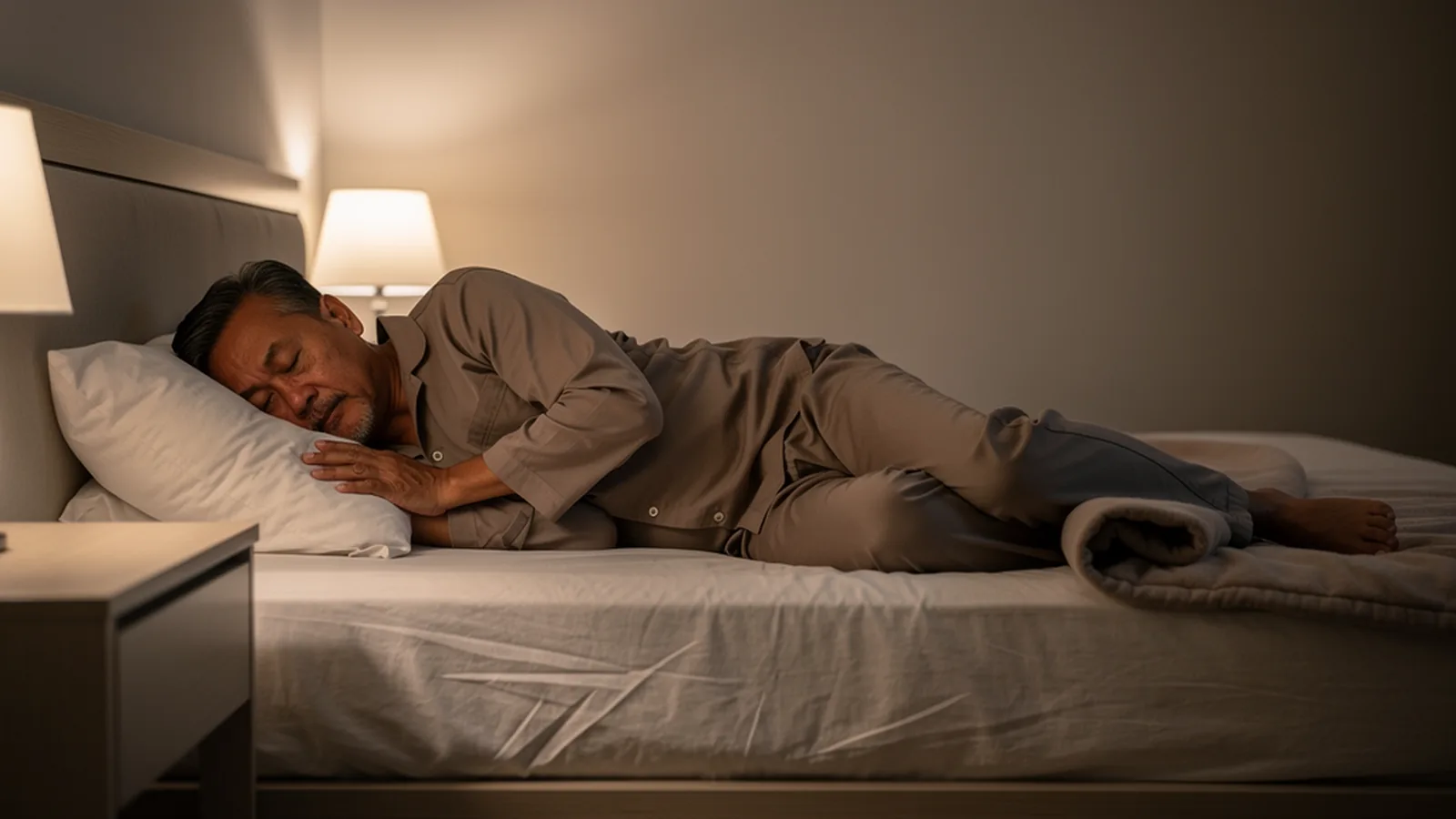
A side-sleeping pillow or wedge may help you stay off your back. If snoring remains loud or you have pauses in breathing, see a doctor.
2. Manage weight if you have excess weight
For adults with OSA and excess weight or obesity, weight management may reduce OSA severity. Guidance emphasizes comprehensive lifestyle intervention rather than a single short-term measure.
For adults with OSA and excess weight or obesity, weight management may be part of treatment.
3. Reduce or avoid alcohol close to bedtime
Alcohol can contribute to snoring. If you notice worse snoring on nights when you drink, reducing alcohol is a practical starting point.
4. Stop smoking
Smoking can contribute to snoring. Stopping smoking is one of the recommended basic care steps.
5. Address nasal congestion according to its cause
Blocked or narrow nasal airways can contribute to snoring. NHS guidance lists nasal sprays or decongestants when nasal blockage is the cause.
Nasal strips or a nasal dilator may help when blocked or narrow nasal airways contribute to snoring.
6. Review medicines or products that cause drowsiness with a doctor
Do not take sleeping pills unless a doctor recommends them, because they can worsen sleep apnea.
7. Get enough sleep on a regular schedule
A regular sleep schedule is one part of the good sleep habits recommended for people with sleep apnea. If you remain very sleepy or have pauses in breathing, seek an assessment.
When should snoring be assessed with a sleep study, and which test is appropriate?
Snoring alone does not establish a diagnosis of OSA. See a doctor to consider testing if someone observes pauses in breathing, gasping, choking, significant daytime sleepiness, or a safety risk.
Questionnaires or prediction tools should not be used to diagnose OSA without sleep testing. A doctor needs to assess symptoms and underlying conditions before selecting the appropriate test.
A home sleep apnea test may be used for adults without complicated conditions who have symptoms or signs suggesting an increased risk of moderate to severe OSA. For people with significant heart or respiratory disease, suspected sleep-related hypoventilation, long-term opioid use, a history of stroke, or severe insomnia, AASM guidance recommends a full in-laboratory sleep study instead.
If one home sleep apnea test is negative, inconclusive, or technically inadequate, AASM guidance recommends a full in-laboratory sleep study to diagnose OSA. Read more at What is a sleep study? and Home sleep testing.
Not sure which test to start with?
You can leave your details for the NK Sleepcare team to contact you with initial information. Diagnosis and selection of the appropriate type of test should be assessed by a doctor.

Medical treatment for snoring and OSA
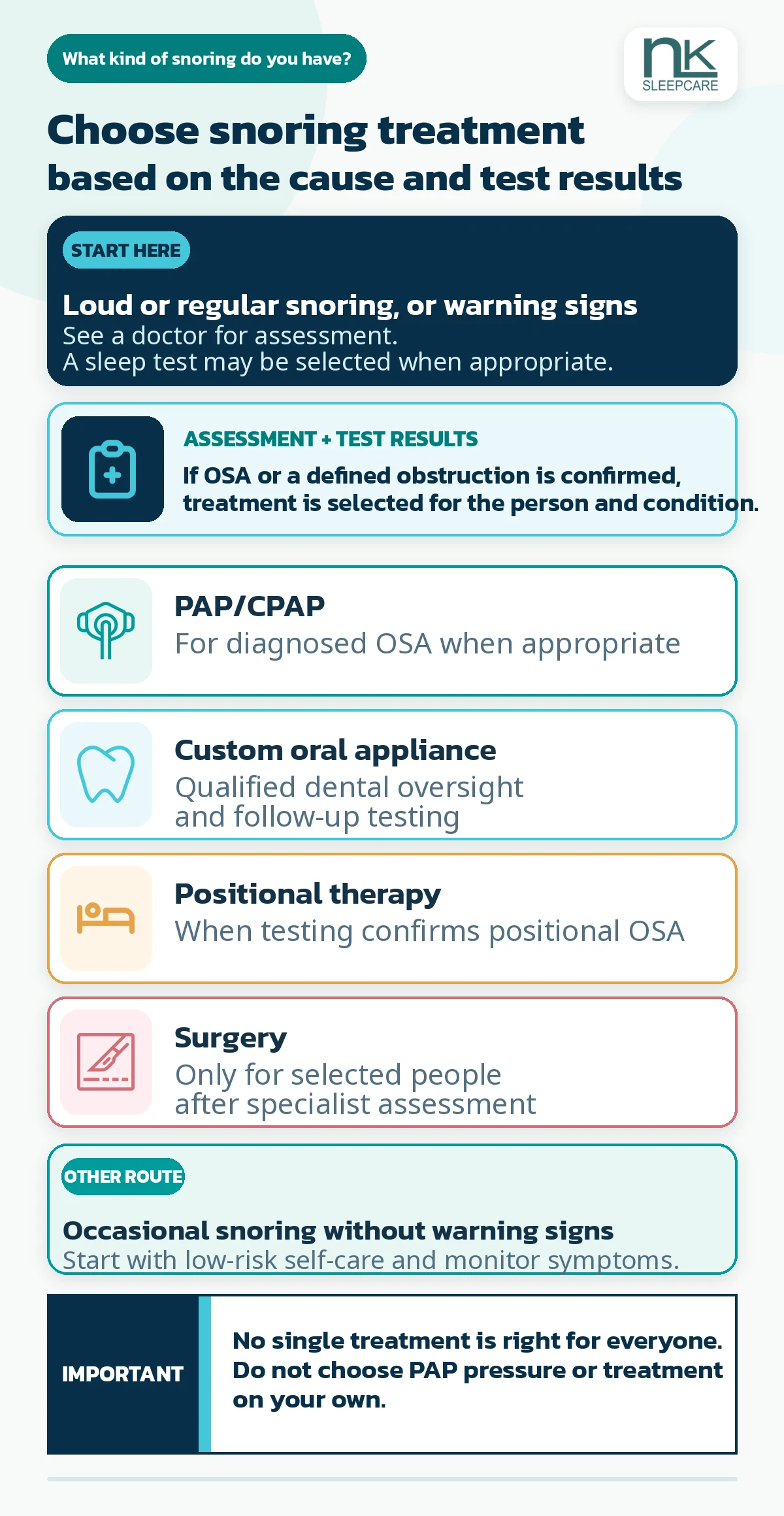
For people with OSA, treatment and follow-up should be tailored to the diagnosis, symptoms, coexisting conditions, and individual needs.
Treating nasal and upper-airway problems
If nasal blockage contributes to snoring, treatment should be based on the cause. If an anatomical obstruction is suspected, NICE recommends considering referral for an ear, nose and throat assessment.
Treating nasal blockage may help snoring when nasal narrowing or blockage is the cause. However, easier nasal breathing alone does not establish that OSA is controlled or resolved. For people with OSAHS using CPAP, a mandibular advancement splint, or a positional modifier, NICE recommends monitoring treatment effectiveness using OSA symptoms, the apnea–hypopnea index (AHI) or oxygen desaturation index (ODI), adherence, and available treatment data.
PAP/CPAP therapy
Positive airway pressure (PAP) delivers air pressure through a mask to support the airway during sleep. Continuous positive airway pressure (CPAP) and auto-adjusting positive airway pressure (APAP) are PAP modes used for ongoing treatment in appropriate adults.
AASM guidance recommends PAP for adults diagnosed with OSA who have excessive daytime sleepiness. Starting treatment should include education and follow-up of effectiveness and use.
PAP delivers air pressure through a mask; it is not supplemental oxygen. PAP therapy should be based on an objective OSA diagnosis and started through an appropriate initiation pathway. To learn about device types and how they work, see What is CPAP?
Oral appliances
A mandibular advancement oral appliance protrudes and stabilizes the lower jaw to help maintain an open airway during sleep.
For adults who snore without OSA, a sleep physician should confirm primary snoring before an oral appliance is prescribed. For people with OSA, an oral appliance may be an option when they cannot use CPAP or prefer another option. A custom, adjustable device should be provided under qualified dental oversight, with follow-up testing to confirm effectiveness.
Follow-up should include oversight of dental side effects, occlusal changes, and treatment effectiveness. Read more about adjustable oral appliances.
Positional therapy
Some people with OSA have more obstruction when they sleep on their back; this is called positional OSA.
For mild to moderate positional OSA, NICE says a positional modifier can be considered when other treatments are unsuitable or not tolerated. Positional therapy is unlikely to be sufficiently effective on its own in severe OSA.
NICE advises tailoring follow-up to the person’s overall OSA treatment plan.
Surgery
For adults with OSA and a body mass index below 40 kg/m² who are intolerant or unaccepting of PAP, AASM guidance recommends discussing referral to a sleep surgeon. For adults with OSA and a body mass index below 40 kg/m², referral can also be discussed when PAP adherence remains persistently inadequate because of pressure-related side effects.
AASM guidance also recommends discussing bariatric-surgery referral with adults who have OSA and class II or III obesity who are intolerant or unaccepting of PAP. It suggests PAP as initial therapy for adults with OSA and a major upper-airway anatomical abnormality before considering referral for upper-airway surgery.
These recommendations call for a patient-oriented discussion of alternative or adjunctive treatment options. Snoring can return after surgery. NICE advises tailoring follow-up to the person’s overall OSA treatment plan.
Choosing an approach that fits your symptoms
For mild snoring, the lower-risk steps described above are a practical starting point. If symptoms persist or affect daily life, arrange an assessment.
If someone notices pauses in breathing or you are very sleepy during the day, see a doctor. If testing finds OSA, choose and follow treatment with a doctor based on the diagnosis, symptoms, coexisting conditions, and individual needs.
How useful are over-the-counter anti-snoring devices?
Anti-snoring options described in patient guidance include nasal strips or dilators, chin straps, side-sleeping pillows or wedges, and oral devices. They address different possible contributors to snoring.
Before buying, try to answer these three questions:
- Does this device address obstruction at the nose, sleep position, or throat?
- Do you have signs that should prompt testing for OSA?
- If snoring becomes quieter, how will you follow up to know whether breathing during sleep has really improved?
If a device moves the jaw forward, consider possible dental side effects and changes in the bite. For adults with OSA, the guideline suggests a custom, adjustable oral appliance rather than a non-custom device. Read an overview at Types of anti-snoring devices and how to choose.
Frequently asked questions about snoring and OSA
Is loud snoring every night dangerous?
Loud snoring is one possible symptom of sleep apnea, but loudness alone may not indicate how severe sleep apnea is. If loud snoring occurs with pauses in breathing, gasping, daytime sleepiness, or waking unrefreshed, seek an assessment.
Can a high pillow help with snoring?
A pillow or wedge that helps keep you on your side may reduce snoring if it is worse when you sleep on your back. If someone notices pauses in breathing, gasping, choking, or significant daytime sleepiness, see a doctor.
Is there a medicine that directly treats snoring?
There is no single medicine that treats every cause of snoring; treatment depends on the cause. NHS guidance lists decongestants or nasal sprays when blocked or narrow nasal airways contribute to snoring and says sleeping pills can sometimes cause snoring.
Can continuous positive airway pressure (CPAP) help stop snoring?
For adults with diagnosed OSA and excessive daytime sleepiness, AASM recommends PAP such as CPAP. PAP therapy should be based on an objective OSA diagnosis and started through an appropriate initiation pathway.
If an oral appliance makes snoring quieter, does that mean treatment has worked?
For people with OSA using an oral appliance, the guideline recommends follow-up sleep testing to confirm treatment effectiveness. Follow up with the sleep physician and dentist.
Can snoring be cured completely?
How much snoring improves depends on the cause. Lifestyle changes or cause-specific treatment may reduce snoring, but surgery does not always work and snoring can return. People with OSA may need ongoing treatment and follow-up.
If I have tried lifestyle changes, how long should I wait before seeing a doctor?
Pauses in breathing, gasping, choking, significant daytime sleepiness, or sleepiness while driving should prompt medical assessment. If sleep apnea with excessive sleepiness has been confirmed, do not drive until the sleepiness is controlled.
If you do not have these symptoms and snoring is mild, you may try the lower-risk measures described above. If snoring continues, disrupts your life, or you are unsure about OSA, seek an assessment to find the cause.
Summary: addressing snoring and assessing OSA
A good approach to snoring starts with finding the cause and checking whether OSA warning signs are present. Diagnosing OSA requires appropriate testing. If symptoms are mild, you may begin with the lower-risk measures described above.
If someone notices pauses in breathing, gasping, significant daytime sleepiness, or regularly waking unrefreshed, see a doctor. Treatment may include PAP such as CPAP, an oral appliance, risk-factor management, positional therapy, or surgery for selected people. The choice depends on test results, symptoms, coexisting conditions, and individual suitability, with follow-up to check results.
The information about snoring and OSA on this page is general information. It does not replace a diagnosis or individual advice. If you have concerning symptoms or an underlying medical condition, speak with a doctor or healthcare professional involved in your care.
References
- NHS. Snoring. Checked August 8, 2026.
- Kapur VK, et al. Clinical Practice Guideline for Diagnostic Testing for Adult Obstructive Sleep Apnea. Journal of Clinical Sleep Medicine. 2017. Checked August 8, 2026.
- NHS. Sleep apnoea. Checked August 8, 2026.
- Hudgel DW, et al. The Role of Weight Management in the Treatment of Adult Obstructive Sleep Apnea. American Journal of Respiratory and Critical Care Medicine. 2018. Checked August 8, 2026.
- NICE. Obstructive sleep apnoea/hypopnoea syndrome and obesity hypoventilation syndrome in over 16s (NG202). 2021. Checked August 8, 2026.
- Patil SP, et al. Treatment of Adult Obstructive Sleep Apnea with Positive Airway Pressure. Journal of Clinical Sleep Medicine. 2019. Checked August 8, 2026.
- Gottlieb DJ, et al. CPAP versus Oxygen in Obstructive Sleep Apnea. New England Journal of Medicine. 2014. Checked September 22, 2026.
- Ramar K, et al. Treatment of Obstructive Sleep Apnea and Snoring with Oral Appliance Therapy. Journal of Clinical Sleep Medicine. 2015. Checked August 8, 2026.
- Randerath W, et al. European Respiratory Society guideline on non-CPAP therapies for obstructive sleep apnoea. European Respiratory Review. 2021. Checked August 8, 2026.
- Kent D, et al. Referral of Adults with Obstructive Sleep Apnea for Surgical Consultation. Journal of Clinical Sleep Medicine. 2021. Checked August 8, 2026.
- National Heart, Lung, and Blood Institute. Does how loud you snore matter to your health? 2024. Checked September 22, 2026.