Solutions for snoring start with identifying the cause and progressing to the most suitable treatment for you.
Last updated:
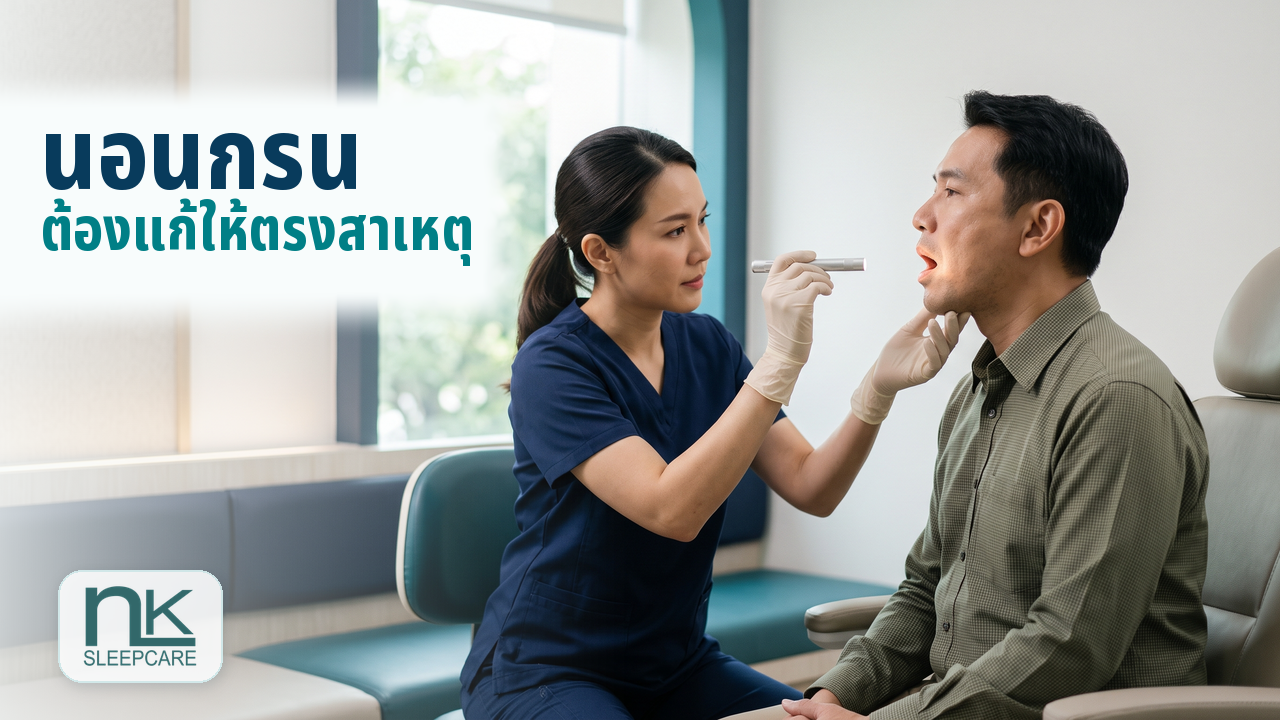
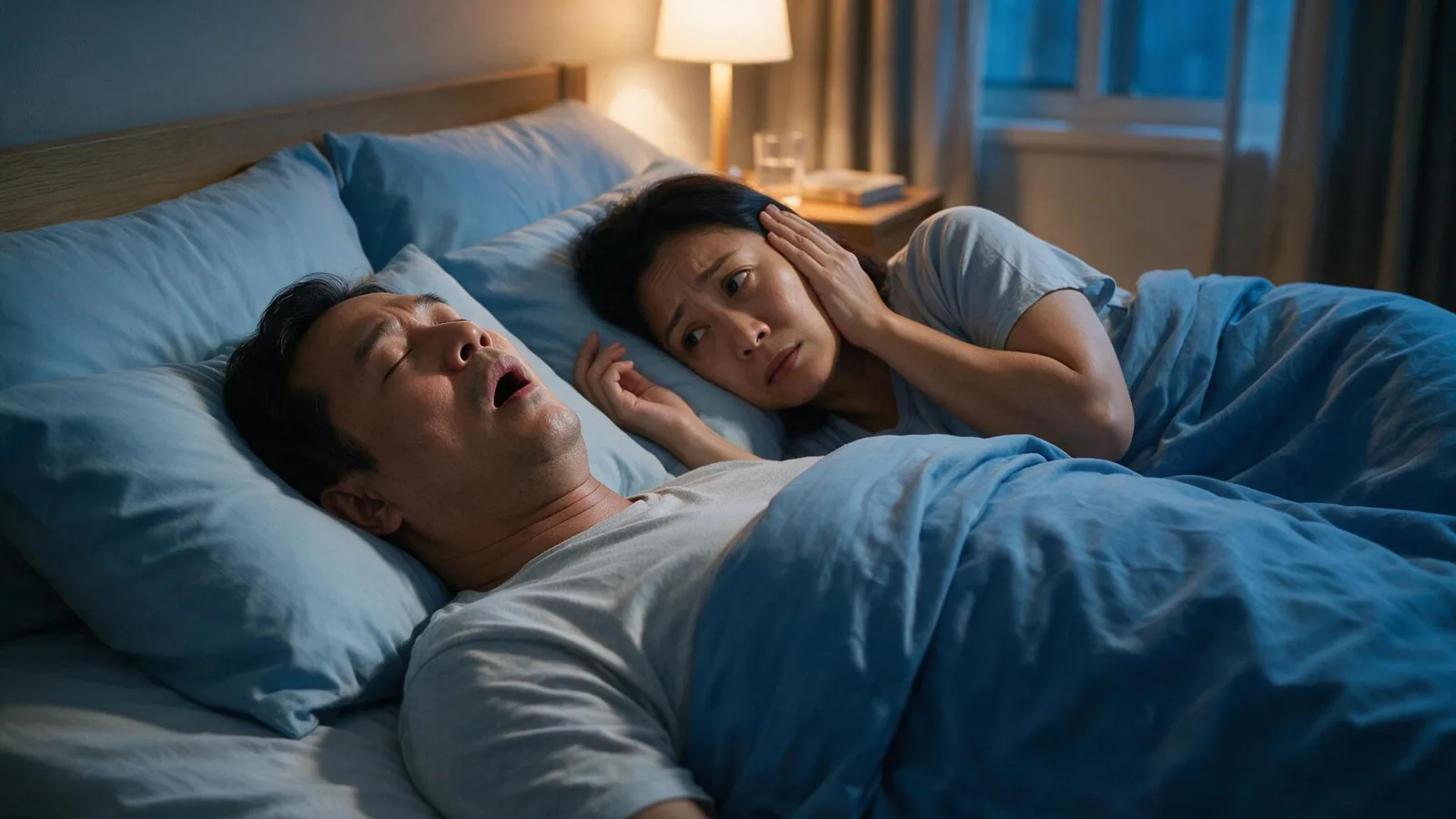
If you're looking for answers to "how to stop snoring," a good starting point is to find the cause and see if there are any signs of obstructive sleep apnea (OSA). Snoring can be caused by many factors, such as sleeping on your back, drinking alcohol close to bedtime, nasal congestion, being overweight, or airway structure issues.
Snoring can disturb those nearby, but loudness or social impact alone doesn't indicate the severity of OSA. Therefore, solutions for snoring should address the underlying cause, associated symptoms, daytime impact, and test results if deemed necessary by a doctor. It shouldn't start with simply buying devices based on advertising alone.
The information regarding symptoms and basic care guidelines is consistent with recommendations for people with snoring.1 Confirming OSA requires proper evaluation and sleep studies; it cannot be determined from snoring alone.
In short, where should you start if you snore?
- If you snore occasionally and have no other symptoms, try adjusting your sleeping position, reducing alcohol consumption, managing your weight if you are overweight, and addressing your nasal congestion appropriately first.
- If you snore loudly or almost every night, or if others notice you stopping breathing, gasping for breath, choking, or experiencing excessive daytime sleepiness, you should see a doctor to evaluate for sleep apnea.
- If sleep apnea is detected, treatment may include a PAP/CPAP machine, oral devices, weight management, treatment of nasal problems, or surgery in some patients.
- There is no one method that works for everyone, and a reduction in snoring does not always confirm that sleep breathing has returned to normal.
The reason for differentiating ordinary snoring from OSA (Obstructive Sleep Apnea) is that OSA causes the airway to narrow or close repeatedly during sleep, disrupting sleep continuity and potentially leading to drowsiness that compromises safety. If warning signs appear, you should seek evaluation.2 Instead of trying the equipment yourself.
What causes snoring?
Snoring is caused by air flowing through narrowed upper airways during sleep, causing the tissues in the soft palate, uvula, base of the tongue, or pharynx to vibrate and produce sound.
There are many things that can narrow the airway, such as:
- Lie on your back with your tongue pointing backward.
- Drinking alcohol or using medications that cause drowsiness may cause the respiratory muscles to relax more.
- Being overweight or having fat accumulation around the neck and airways.
- Nasal congestion from allergies, colds, or internal nasal structures.
- Characteristics of the jaw, tongue, soft palate, or tonsils.
- As we age, muscles and tissues tend to loosen more easily.
- Smoking irritates and inflames the airways.
Many people have more than one contributing factor, so the cause shouldn't be concluded solely on body shape or snoring sound. These common factors align with recommendations for those experiencing snoring.1 For more information on physical structures, see: Anatomical factors that contribute to snoring. yes
How does ordinary snoring differ from obstructive sleep apnea (OSA)?
Not everyone who snores has sleep apnea, but snoring can be one sign of it. Obstructive Sleep Apnea (OSA)
In individuals with OSA, the airway repeatedly narrows or closes during sleep, causing reduced or intermittent breathing. The body attempts to reopen the airway, resulting in discontinuous sleep. Even if the individual with OSA does not feel awake, the symptoms and assessment principles are consistent with diagnostic guidelines and patient data.2,3
Signs that warrant a doctor's visit.
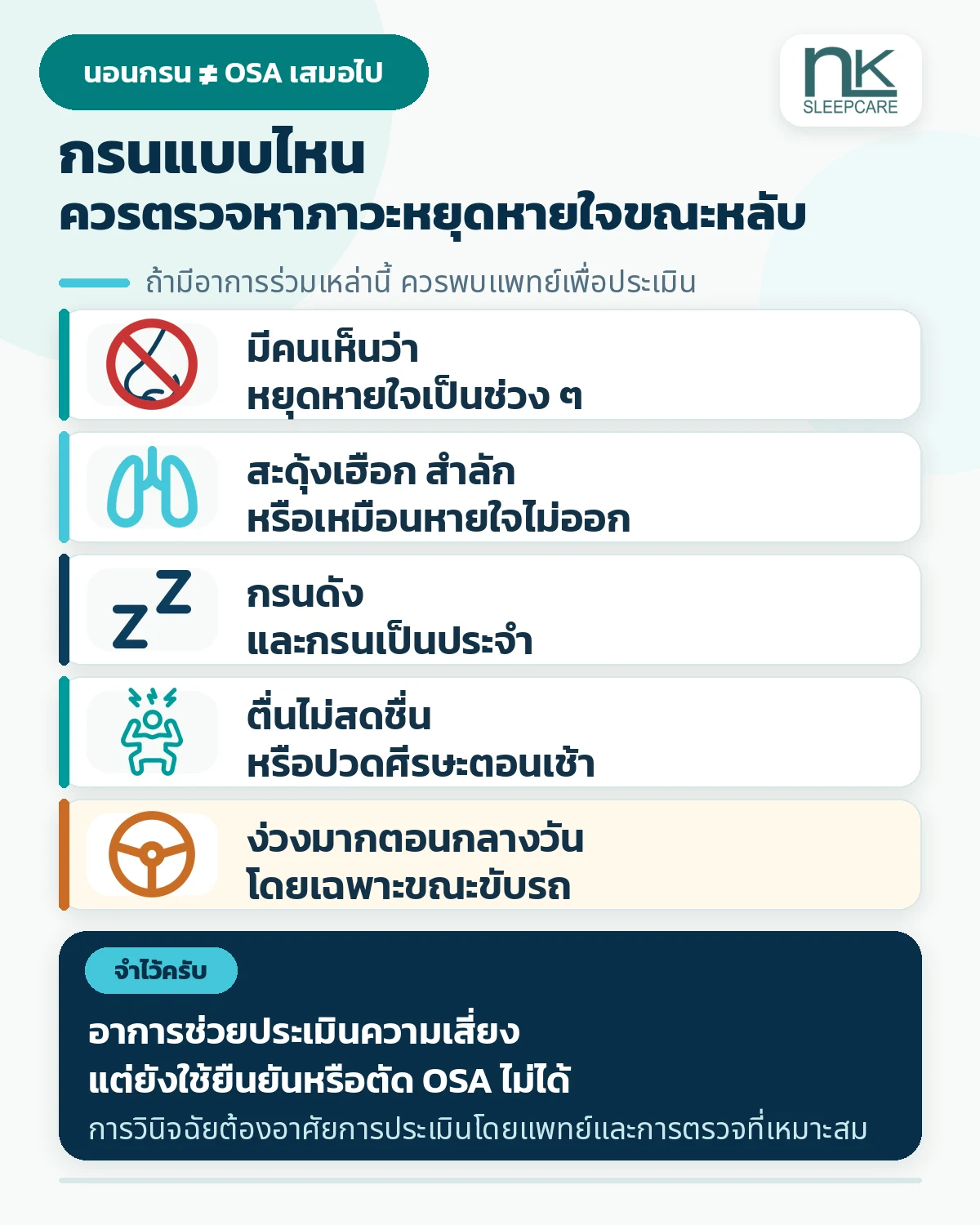
You should schedule an evaluation if you or someone sleeping next to you notices the following symptoms.
- Breathing stops intermittently during sleep.
- Startled, choking, or feeling like you can't breathe.
- Loud snoring and frequent snoring.
- Waking up feeling unrested, having a headache in the morning, or frequently experiencing a dry throat.
- Feeling very sleepy during the day, having decreased concentration, or easily falling asleep.
- Drowsiness while driving or operating machinery.
- I've gotten enough sleep but I'm still feeling tired.
If you feel drowsy to the point where you risk driving, you should avoid driving and seek medical evaluation as soon as possible.3 yes
Self-help methods to treat snoring, and limitations when obstructive sleep apnea (OSA) is suspected.
If you don't experience sleep apnea, gasping, choking, excessive drowsiness, or drowsiness that interferes with driving, and your snoring is mild, you can start by modifying low-risk behaviors. The following methods can reduce snoring in some people, but they are not a substitute for OSA screening when warning signs are present, and they do not guarantee that they will stop everyone from snoring.
1. Try changing from lying on your back to lying on your side.
When lying on your back, the tongue and tissues in the throat may fall backward, narrowing the airway. People who snore only when lying on their back may therefore snore less when lying on their side.
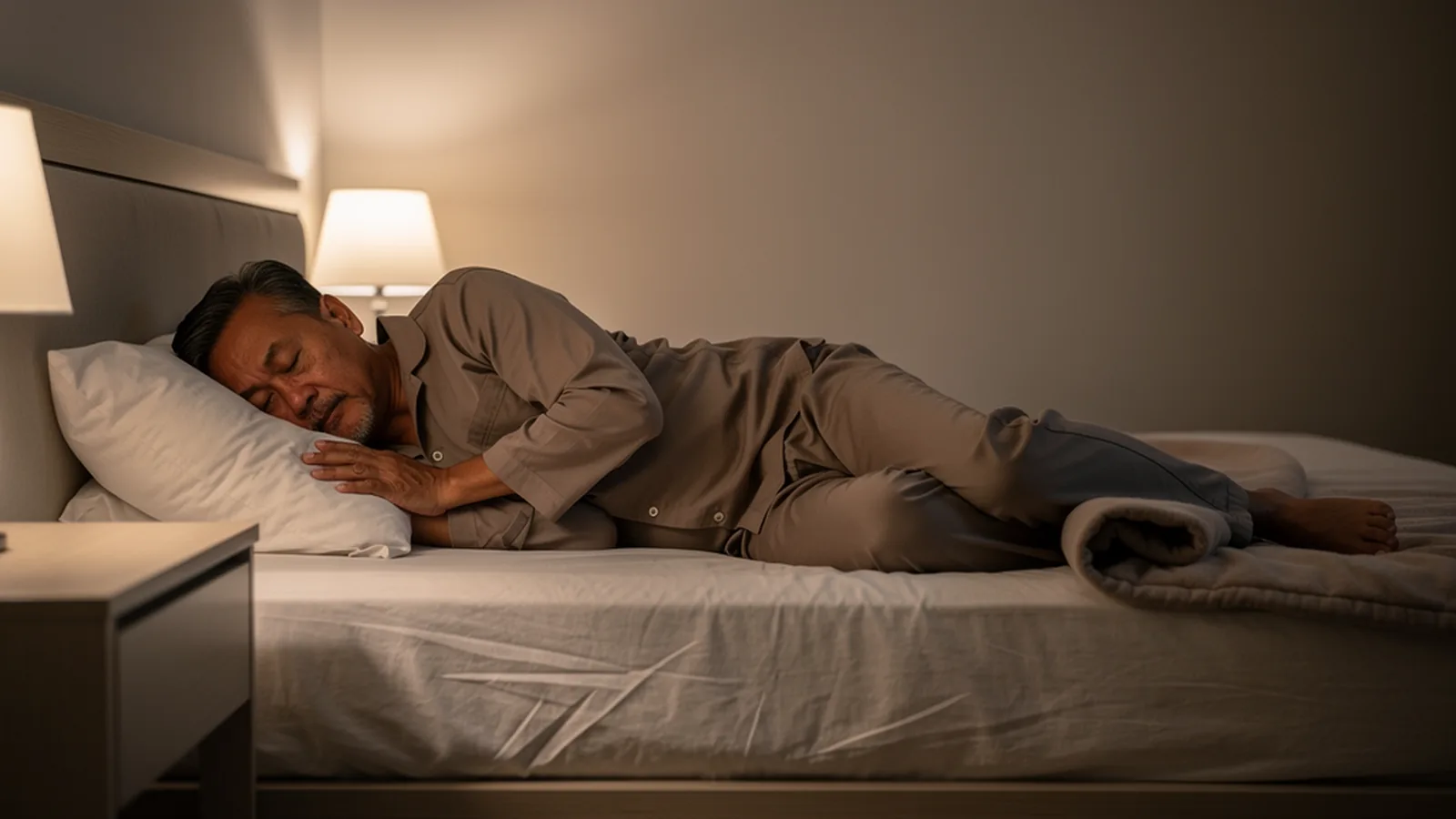
You may use body pillows, torso support pillows, or position reminders to help reduce the tendency to roll over onto your back. However, if you snore excessively or experience sleep apnea, don't rely solely on changing sleeping positions. Read more about basic care tips.1
2. Manage your weight if you are overweight.
In individuals who are overweight or obese, weight management may help reduce the severity of OSA and may even improve snoring symptoms. A suitable approach should include a healthy diet, physical activity or exercise, and ongoing lifestyle modifications. This principle aligns with weight management guidelines for OSA.4
Even thin people can snore or have OSA (Obstructive Sleep Apnea). If OSA is detected, weight management may be part of the treatment, but it should not replace the primary treatment deemed necessary by your doctor.
3. Reduce or avoid alcohol close to bedtime.
Alcohol relaxes the muscles in the throat, which can lead to louder snoring or worsen airway obstruction, especially when consumed close to bedtime. If you notice increased snoring on nights after drinking, reducing or avoiding alcohol before bed is a good starting point.1 yes
4. Quit smoking.
Cigarette smoke irritates the nose and throat and may trigger snoring. Quitting smoking has overall health benefits and is one of the first pieces of advice for basic health care.1
5. Treat nasal congestion according to its cause.
If you have difficulty breathing through your nose, you may breathe through your mouth and snore more. You should investigate the cause, whether it's allergies, infection, a deviated nasal septum, or another problem. Nasal irrigation with saline solution may help some people. Antihistamines, nasal sprays, or decongestants should be chosen according to each individual's condition and health.
Nasal strips or nasal speculums may help improve airflow through the nose in some cases, but they are not a cure for obstruction in the throat and do not guarantee that OSA is controlled. See guidelines for managing primary snoring triggers.1
6. Review any medications or products that cause drowsiness with your doctor.
Sleeping pills may worsen obstructive sleep apnea (OSA) in some people, so they should not be used unless advised by a doctor. For other medications that cause drowsiness, consult your doctor or pharmacist, and do not stop prescribed medications on your own.3 yes
7. Get enough sleep and sleep at a regular time.
Insufficient sleep worsens daytime sleepiness and makes it difficult to distinguish between fatigue from OSA and lack of rest. Maintaining a relatively consistent sleep and wake schedule can help both patients and doctors assess the condition more clearly. While getting enough sleep isn't a direct cure for OSA, if you experience persistent sleepiness or sleep apnea, you should seek professional evaluation.3
When should a sleep test be considered to assess obstructive sleep apnea (OSA), and what type of test should be done?
Sleep studies to diagnose obstructive sleep apnea (OSA) are not necessary for everyone who snores immediately. However, you should consult a doctor for consideration of testing if someone is observed to stop breathing, gasp, choke, experience excessive drowsiness, or poses a safety risk.
Assessment forms, applications, smartwatches, or audio clips from phones can help gather initial information, but they cannot confirm or rule out OSA. Doctors must evaluate the symptoms, underlying conditions, airway structure, medications used, and select the appropriate tests.2 yes
Home sleep studies may be used in uncomplicated adults with signs or symptoms indicating an increased risk of moderate to severe OSA. However, for those with significant heart or respiratory disease, suspected shortness of breath, chronic opioid use, a history of stroke, or severe insomnia, AASM guidelines recommend a full sleep laboratory study instead.2
If a single home sleep study yields negative, inconclusive, or technically insufficient results, AASM guidelines recommend further full laboratory testing to diagnose OSA.2 Read the details at: What is a sleep test? and Home sleep study yes
Medical treatments for snoring and obstructive sleep apnea (OSA).
Treatment for snoring must be differentiated between those who snore without OSA and those who are diagnosed with OSA. The goal is not just to reduce the snoring sound, but also to control obstruction, reduce symptoms, and monitor whether breathing during sleep improves. Therefore, the treatment method depends on the cause, test results, comorbidities, and the individual's suitability.
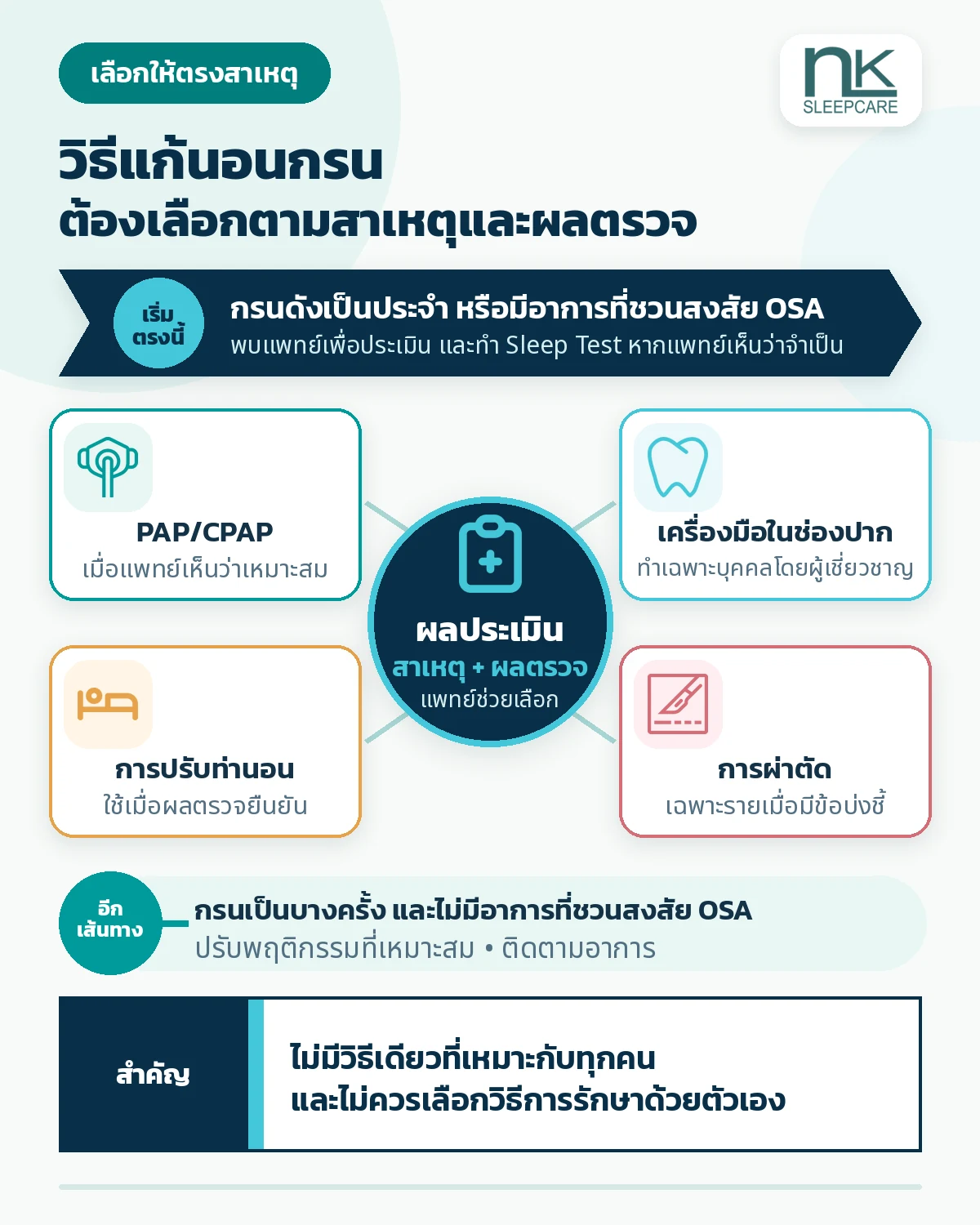
Treats problems with the nose and upper respiratory tract.
For those with nasal allergies, nasal polyps, a deviated nasal septum, or enlarged tonsils, treating the underlying cause may improve breathing and reduce snoring in some people. In some cases, it may also make using PAP (Pain Relief Device) more comfortable.
Even if nasal breathing improves, it cannot be concluded that OSA has resolved, as the obstruction can be located at various levels, and confirming OSA control requires appropriate monitoring.2
PAP/CPAP machine
A positive airway pressure (PAP) machine delivers pressurized air through a mask to prevent the airway from narrowing or closing while sleeping. A machine that maintains a constant pressure is called a Continuous Positive Airway Pressure (CPAP) machine, while Automatic Positive Airway Pressure (APAP) machines adjust the pressure within a set range based on the user's breathing.
AASM guidelines recommend PAP treatment for adults diagnosed with OSA and with clearly evident daytime sleepiness, and suggest that physicians consider PAP in those with reduced sleep quality or concomitant hypertension. Initiation should include guidance on mask usage, humidity control, adjustment, and monitoring of usage data.5 yes
PAP (Paper Assisted Respirator) is not oxygen and should not be purchased with self-diagnostic pressure selection without proper evaluation. For a better understanding of the different types of devices and their operation, please see... What is CPAP?
Oral instruments
A mandibular advancement device helps to propel the jaw and tongue forward, increasing airway space during sleep.
For adults who snore without OSA, it is recommended that a sleep specialist confirm primary snoring and consider prescribing a device. For those with OSA, devices may be an alternative when a continuous positive airway pressure (CPAP) machine is not suitable or when an alternative is desired. These should be custom-made, adjustable devices, administered under the supervision of a sleep specialist, with follow-up and confirmation of effectiveness as needed.6 yes
It is necessary to monitor bite alignment, jaw pain, and assess effectiveness, as a reduction in snoring alone is not enough to confirm OSA control. Read more details here. Adjustable oral appliances
Treatment in a supine position.
Some people who snore or have OSA experience increased obstruction when lying on their backs, a condition known as positional snoring or positional OSA. Therefore, treatment based on sleeping position should only be considered if diagnostic tests confirm a relationship between the snoring sound and the person's sensations, and not solely based on the snoring itself or their feelings.
In mild to moderate OSA, reclining therapy may be used as an adjunct or alternative when positive airway pressure (PAP) or other methods deemed unsuitable or tolerable by the physician. NICE NG202 guidelines state that reclining therapy is unlikely to be sufficiently effective in severe OSA and should therefore not be used as a replacement for primary treatment without evaluation.7,8
After initiating treatment in a supine position, symptoms should be monitored and the effectiveness assessed as appropriate, because a reduction in snoring does not confirm that OSA is controlled.
surgery
There are many types of surgery, ranging from correcting nasal problems and tonsillectomy to correcting the structure of the soft palate, tongue, or jaw. The doctor will consider the location of the obstruction, the severity of OSA, overall health, and response to other methods.
For adults with OSA, referral to a sleep surgeon may be appropriate in some cases, such as when a positive pressure air (PAP) machine is unsuitable, they refuse to use a PAP machine, they experience side effects from pressure that lead to inconsistent use, or there is a structural abnormality that requires specialized evaluation. Referral does not mean that everyone needs surgery, and the location of the obstruction, overall health, and other options must be considered together.9 yes
The outcome of surgery varies depending on the cause and type of procedure. Snoring may return, and those with OSA may require follow-up examinations after treatment.
Choose the right solution for snoring and obstructive sleep apnea (OSA) based on your symptoms.
If snoring is occasional and doesn't present with sleep apnea, gasping, choking, or excessive drowsiness, try starting with sleeping on your side, reducing alcohol consumption, managing weight if overweight, quitting smoking, and addressing nasal congestion according to its cause. It's important to monitor the frequency of snoring, sleep quality, and daytime symptoms, not just whether the snoring has become quieter.
If you snore frequently, are observed to have pauses in breathing, or experience excessive daytime sleepiness, you should undergo evaluation before choosing a device. Those diagnosed with OSA should select and follow up on treatment with a doctor based on test results, symptoms, comorbidities, and individual suitability. This screening principle is consistent with information for individuals with sleep apnea.3 yes
Are over-the-counter anti-snoring devices effective, and what are their limitations regarding obstructive sleep apnea (OSA)?
There are many types of anti-snoring devices, ranging from nasal strips and nasal dilators to chin straps, sleeping position pillows, and oral appliances. Each type addresses a different problem, so you shouldn't expect one device to work for everyone.
Before buying, try to answer these three questions first.
1. This device addresses obstruction in the nose, sleeping position, or throat area. 2. Do you have any signs that warrant checking for OSA? 3. If the noise subsides after use, how can I track whether sleep breathing is actually improving?
When using a jaw-moving device, be mindful of the temporomandibular joint (TMJ) joints, teeth, and bite. Over-the-counter devices are not the same as custom-made devices that are adjusted and monitored by a dentist.6 You can read the overview here. How many types of anti-snoring devices are there, and how do you choose one?
Frequently asked questions about snoring and obstructive sleep apnea (OSA).
Is it dangerous to snore loudly every night?
Loudness alone cannot indicate the severity of OSA. However, if you snore loudly regularly and experience pauses in breathing, sudden gasps, daytime sleepiness, or feel unrested upon waking, you should seek evaluation.3
Can using a high pillow help stop snoring?
Elevating the head or using pillows to support sleeping position may help some people, especially those who snore heavily when lying on their back or have nasal congestion, but it is not a method to diagnose or treat OSA in all cases. If someone exhibits symptoms such as apnea, gasping, choking, or excessive drowsiness, they should consult a doctor.1
Are there any medications that directly treat snoring?
There is no single medication that treats all causes of snoring. Medication may help with specific problems, such as nasal allergies, but the choice of medication depends on the cause, underlying medical conditions, and other existing medications. You should not buy sleeping pills hoping to sleep better, as this may worsen snoring or OSA in some people. Read more general advice for further information.1
Does a continuous positive airway pressure (CPAP) machine help stop snoring?
In individuals with OSA and when indicated, positive airway pressure machines such as CPAP help keep the airway open during sleep, often reducing obstructive snoring. However, CPAP is not the answer for everyone who snores, and treatment should begin with diagnosis and proper setup.5
If using oral appliances reduces snoring, does that mean the treatment was successful?
Conclusions cannot be drawn solely from snoring, especially for those with OSA (Obstructive Syndrome). Follow-up with a doctor and dentist is recommended, along with an evaluation of effectiveness.6 To confirm that breathing is properly controlled.
Is it possible to completely cure snoring?
The extent to which snoring is reduced depends on the cause. Some people experience a decrease in snoring after lifestyle changes or treatment of underlying structural problems, while others may require devices or ongoing treatment. The ideal goal is to control obstruction, reduce symptoms, and improve sleep quality, without guaranteeing a complete cure for everyone.1
If I've tried adjusting my lifestyle, how long should I wait before seeing a doctor?
For snoring, there's no fixed waiting period before seeing a doctor. If someone witnesses you stopping breathing, gasping for breath, choking, excessive drowsiness, drowsiness while driving, or feeling fatigued even after getting enough sleep, you should see a doctor without delay. And you should avoid driving when drowsiness compromises your safety.
If you don't have these symptoms and your snoring is mild, you might try sleeping on your side, reducing alcohol consumption, quitting smoking, managing your weight if you are overweight, and regularly addressing nasal congestion according to its cause. Keep a record of your snoring frequency and daytime symptoms. If snoring persists, interferes with your life, or you are unsure if you have OSA (Obstructive Sleep Apnea), you should seek professional evaluation to determine the cause.1
Summary of methods to treat snoring and obstructive sleep apnea (OSA).
An effective way to treat snoring is to start by identifying the cause and assessing whether OSA (Obstructive Snoring) is also present. If it's mild, you might start with adjusting your sleeping position, reducing alcohol consumption, quitting smoking, managing your weight if overweight, and treating nasal congestion according to its cause.
If someone exhibits symptoms such as apnea, gasps, excessive daytime sleepiness, or consistently wakes up feeling unrested, they should undergo an evaluation before choosing a medical device.2 Appropriate treatment may include positive airway pressure devices such as CPAP machines, oral appliances, management of risk factors, or surgery in some patients. The choice of treatment must be tailored to each individual, and post-treatment monitoring is necessary.
The information regarding snoring and OSA on this page is general information and does not replace a personalized diagnosis or advice. If you have any unusual symptoms or underlying medical conditions, you should consult your doctor or healthcare professional.
References
- NHS. Snoring. Checked on August 8, 2026.
- Kapur VK, et al. Clinical Practice Guideline for Diagnostic Testing for Adult Obstructive Sleep Apnea. Journal of Clinical Sleep Medicine. 2017. Checked on August 8, 2026.
- NHS. Sleep apnoea. Checked on August 8, 2026.
- Hudgel DW, et al. The Role of Weight Management in the Treatment of Adult Obstructive Sleep Apnea. American Journal of Respiratory and Critical Care Medicine. 2018. Checked on August 8, 2026.
- Patil SP, et al. Treatment of Adult Obstructive Sleep Apnea with Positive Airway Pressure. Journal of Clinical Sleep Medicine. 2019. Checked on August 8, 2026.
- Ramar K, et al. Treatment of Obstructive Sleep Apnea and Snoring with Oral Appliance Therapy. Journal of Clinical Sleep Medicine. 2015. Checked on August 8, 2026.
- NICE. Obstructive sleep apnoea/hypopnoea syndrome and obesity hypoventilation syndrome in over 16s (NG202). 2021. Checked on August 8, 2026.
- Randerath W, et al. European Respiratory Society guideline on non-CPAP therapies for obstructive sleep apnoea. European Respiratory Review. 2021. Checked on August 8, 2026.
- Kent D, et al. Referral of Adults with Obstructive Sleep Apnea for Surgical Consultation. Journal of Clinical Sleep Medicine. 2021. Checked on August 8, 2026.